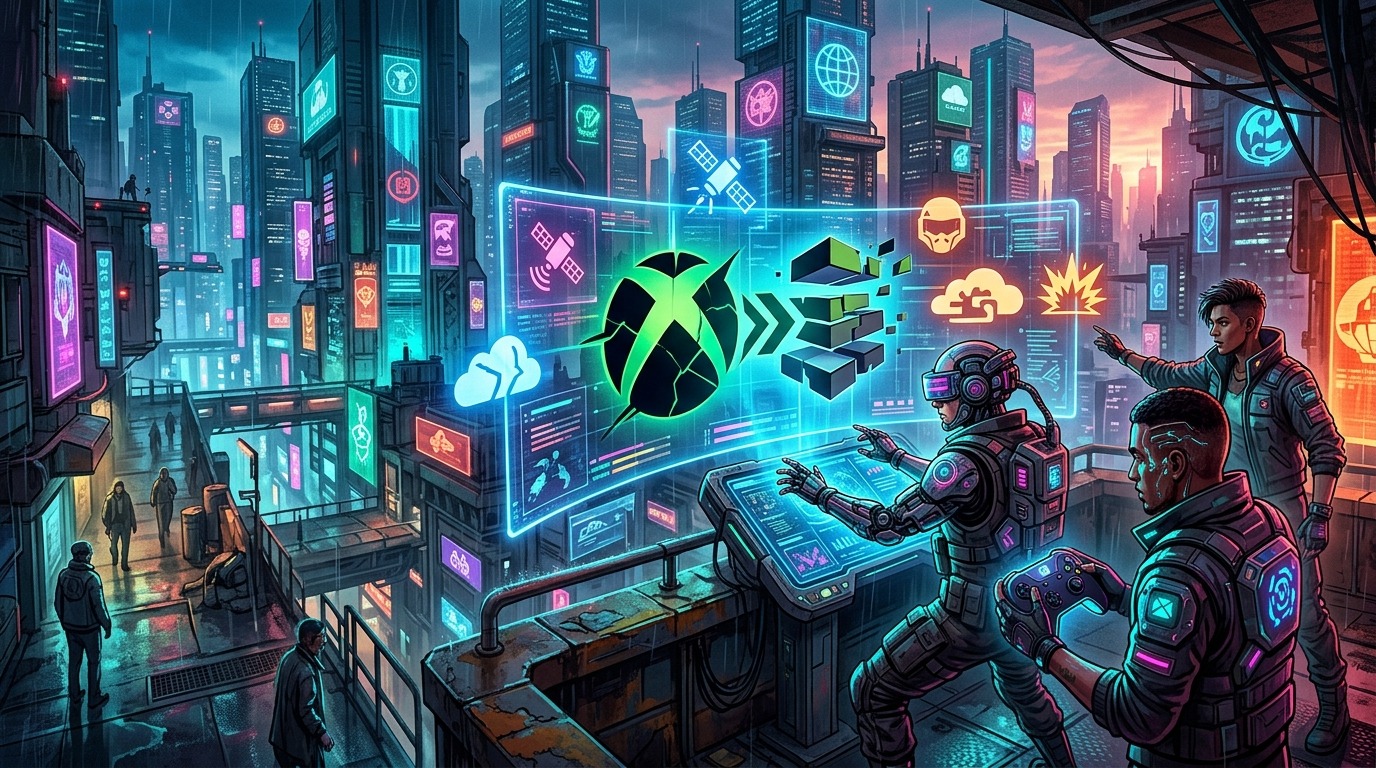
Xbox Game Pass without Call of Duty: Is the era of free premieres over?
Microsoft limits Call of Duty access in Xbox Game Pass, ending the era of free premieres. How will this affect gamers and the future of subscriptions?
A turning point for Xbox Game Pass – Microsoft has just slammed on the brakes, moving away from the strategy that built its brand. The absence of Call of Duty on launch day is not only a blow to fan convenience but also a signal that the era of uncompromising giveaways is over. Is this a strategic move that will save profitability, or a fatal mistake that will drive away millions of gamers? Here's the full picture.
| Title | Call of Duty (as a representative series) |
|---|---|
| Genre | First-Person Shooter |
| Developer | Various (e.g., Infinity Ward, Treyarch, Sledgehammer Games) |
| Publisher | Activision |
| Release Date | Series since 2003 |
| Platforms | PC, Xbox, PlayStation |
| Cover Image | Xbox |
Key Takeaways at a Glance:
- Microsoft restricts Call of Duty access in Game Pass – no more launch day availability for basic subscribers.
- Subscription price cut, but at the cost of a key advantage – access to the latest AAA releases.
- Analysts predict this is a fundamental shift in Microsoft's strategy – the end of the 'free' AAA era.
The End of Uncompromising Launch Day Premieres?
In recent years, Xbox Game Pass has become synonymous with access to the biggest hits on launch day. For many gamers, it was a revolution – for one monthly fee, you got the right to play the newest, most refined productions without having to spend a fortune on each new release. Unfortunately, this model proved to be increasingly unprofitable for Microsoft. After acquiring Activision Blizzard, the conglomerate must show investors real profits. And that's where the end of the 'golden era' begins.
Removing Call of Duty from the launch day offering is not just a symbolic gesture. It's a sign that tech giants are starting to treat games more like traditional media products than streaming services. Instead of counting on a massive influx of subscribers, Microsoft has opted to protect the margins of traditional sales. For the average gamer, this means having to spend around $60-$70 (or the equivalent in local currency) for the full version of the game if they want to play it at launch. Game Pass is no longer a 'press' for free hits.
It's also worth remembering that Call of Duty is not just a game, but a true cultural phenomenon. Each installment in the series is not only a great shooting mechanic but also extensive multiplayer modes that attract millions of people worldwide. Imagine if 'The Witcher 3' didn't hit Game Pass immediately – it would have been a shock to the entire market. Today, that shock has become a reality.
Microsoft is modifying its strategy: flexibility at the expense of stability
Microsoft's new strategy assumes that not all games need to be available immediately. The company is introducing so-called 'windowing' – deliberate delays in game launches within the service. For some gamers, this is a literal disaster; for others, it's an opportunity to start appreciating the value of games. If Game Pass offers access to a game only after 3-6 months from its premiere, it completely changes the approach to buying new releases.
The introduction of the new model is also linked to Asha Sharma's entry as head of Xbox. Sharma, known for her experience in artificial intelligence, wants to make Game Pass more balanced business-wise. Fewer 'free' hits, but more stable revenues. This is logic that might pay off in the long term, but short-term risks losing customer trust.
In this context, it's worth mentioning the possible collaboration between Microsoft and Netflix. Such an alliance could compensate for the lack of the latest games by offering players access to movies and series. This would be a real game-changer – a package that combines electronic entertainment with classic streaming.
Departure from the 'Day-One' Model – What Does It Mean for Gamers?
In practice, this means that Game Pass is no longer the primary source of access to the newest games. Gamers for whom the launch day access was most important may consider canceling their subscription or switching to competing platforms. This will inevitably affect the market – PlayStation Plus could gain value, and sales of Xbox Series X/S consoles could suffer.
Additionally, removing Call of Duty from the Game Pass launch day offering is not just a matter of availability. It's also the loss of the ability to play the game early, which for years has been setting trends in the industry. Each new installment of CoD is not only an extensive single-player campaign but also a huge, multi-million dollar multiplayer experience. A game that lives through its community aspect.
It's also worth noting that this change could affect the quality of the games themselves. If developers know their production will hit Game Pass only after a few months, they might try harder to make the game truly excellent. This, in turn, could translate into better products, but also higher prices.
What's Next for Xbox Game Pass?
At the moment, it's hard to predict exactly what the future of Game Pass will look like. Will Microsoft's new strategy prove to be a bull's-eye, or will it destroy the entire brand? Everything depends on the reaction of gamers. If Game Pass starts losing subscribers, Microsoft may be forced to return to the previous model. If, however, it turns out that gamers are willing to pay more for access to premieres, this strategy may be maintained.
An important issue is also the role of artificial intelligence in game creation. Microsoft declares that it does not want to flood the market with 'soulless AI slop'. This is good news for developers who fear that cost optimization in Game Pass could kill creativity. In an era of algorithms controlling our free time, this approach gives hope for preserving the human element in AAA productions, even if their production costs a fortune today.
Ultimately, removing Call of Duty from the Game Pass launch day offering is not just a change in one company's policy. It's a signal that the entire industry is entering a new era, where subscriptions will have to contend with market realities. Will they manage to survive? We'll find out only in time.
FAQ
Will all Xbox games lose their 'day-one' status?
Currently, the changes mainly affect the Call of Duty series. However, experts warn that this is a trial balloon and in the future, other major AAA titles may be added to the service with a delay.
Why did Microsoft decide to lower the Game Pass price?
It's an attempt to balance the offering. Since the hottest new releases are disappearing from the service, the company had to lower the price to prevent users from canceling their subscription.
Who is now in charge of Xbox's future?
The key figure is Asha Sharma. Her goal is to make Game Pass a profitable project, which involves moving away from the previously very expensive giveaway strategy.