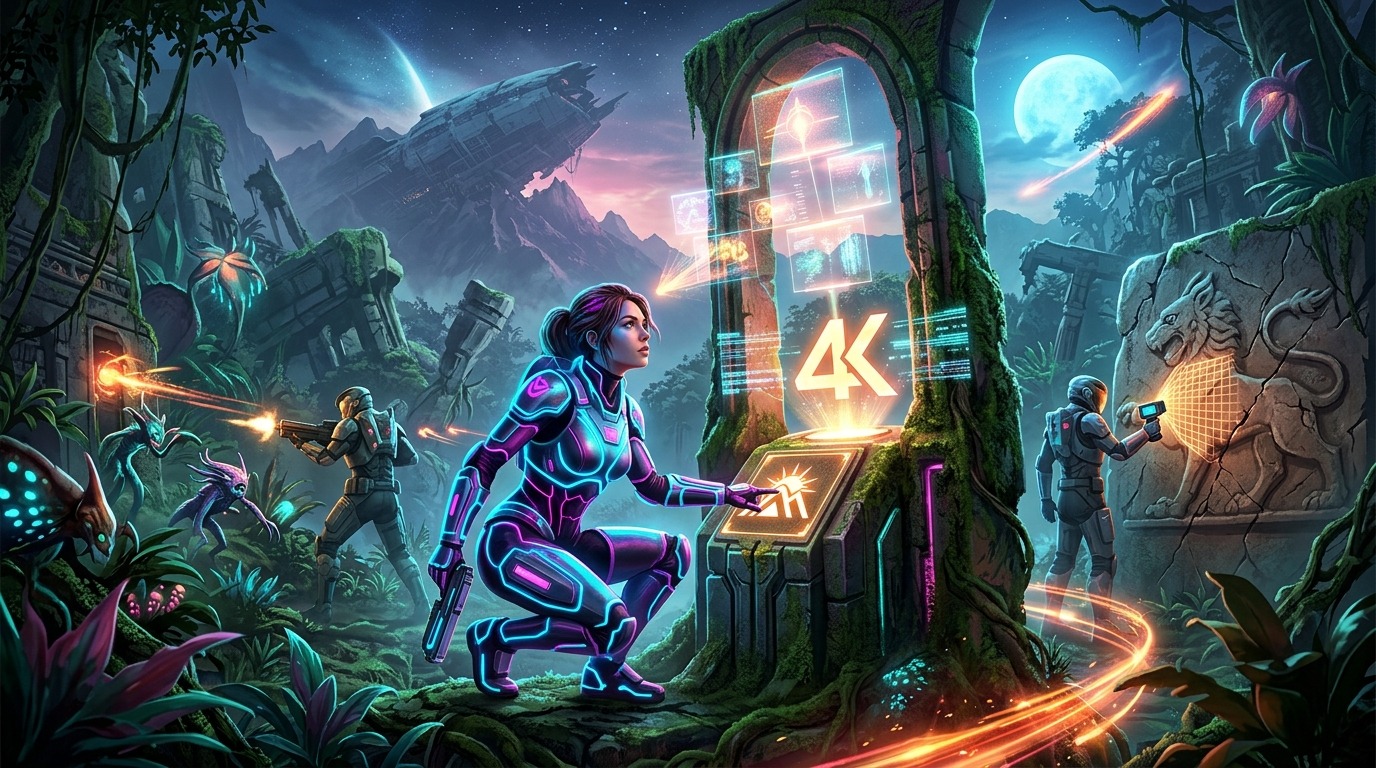
Nostalgia in 4K: Remakes – A Chance to Revive Legends or a Cash Grab?
Why does today's gaming industry so often revisit classic titles? Are remakes a true labor of love or a marketing ploy? Here’s our analysis.
From today's perspective, we return to the same stories – now in 4K. How much is genuine love for the original, and how much is marketing strategy? Are remakes a real chance to revive a legend, or just a fleeting cash grab?
| Title | Classic Remakes |
|---|---|
| Genre | Industry Analysis |
| Developer | Various Developers |
| Publisher | Various Publishers |
| Release Date | 2023-2027 |
| Platforms | PC, PS5, Xbox Series X/S |
| Cover Image | Nostalgia |
Key Takeaways at a Glance:
- The phenomenon of remakes is no longer a trend but a new industry standard.
- Remakes allow us to revisit old, proven mechanics in new, more beautiful forms.
- Economically, they are a safe investment for publishers due to a ready-made fan base.
- Unlike remasters, remakes involve building from scratch on a new engine.
The History of Remakes – From Compromises to Visual Revolutions
The history of remakes dates back to the beginnings of the gaming industry. Early revivals were often makeshift fixes that allowed old titles to run on new hardware. Looking at examples like 'Tomb Raider: Anniversary Edition' or 'Resident Evil Remake', we see the evolution from simple texture improvements to full reconstruction.
Do remake developers really respect the original? Many developers claim that the goal is to pay homage to the original. Others, consciously introduce changes, arguing that thanks to them, the game will be more accessible to a new generation of players.
There's no denying that remakes are huge, ambitious projects today. They require a huge amount of work, and their financing is often based on reliable, proven brands. The gaming market in 2026 strives for maximum fidelity to the original while also modernizing it.
Technology and Nostalgia – Can They Coexist?
Technological progress has meant that remakes can not only refresh the graphics but also change the very essence of the game. Modern engines allow for seamless transitions between locations, dynamic lighting, and even AI bosses whose behaviors are now much more complex than before.
Is it good that thanks to technology we can immerse ourselves in a world known from childhood, but in HD version? A single glance at 'Final Fantasy VII Remake' shows that yes. Technology allows for a new interpretation of old stories while preserving their soul.
Even if the graphics are beautiful, it's not what makes a remake successful. It's attention to detail, fidelity to the original, and respect for the fandom. Every element, from music to character animations, must be polished to ensure the game doesn't lose its soul.
The Psychology of Nostalgia – Why Do We Return to Old Games?
Psychology explains that nostalgic experiences give us a sense of security and comfort. Returning to familiar worlds, we rediscover lost emotions – fear of dark corridors, a thrill during boss fights, the satisfaction of discovering secrets.
Games from the past often offered a simpler, clearer gameplay model that today can be a form of relaxation for a mind accustomed to complex open worlds. We return to them because we want to feel the same thrill that accompanied us when we first launched the game.
Investing in remakes is also investing in emotions. Developers know that players return to old titles not just for the game, but for the feeling it evokes. That feeling is priceless.
Economic Aspects of Remakes
Remakes are not only an opportunity to refresh a brand for publishers but also a way to make a profit. A ready base of fans who are willing to spend money on a new version of a beloved game is a safe investment for publishers. The average price for a premium remake is around 350-450 PLN, which is attractive to developers.
Only exceptional cases, such as 'Resident Evil 4 Remake', which cost even up to about 450 PLN, show that the market is ready to pay more for quality. It's also worth noting that remakes often come out on several platforms – PC, PS5, Xbox Series X/S – which increases their reach.
It's also important to remember that remakes are not just production costs. This also includes marketing, promotion, and even translations into different languages. All this affects the final price, but publishers know that fans are willing to pay for quality.
Remake vs. Remaster – What to Choose?
The difference between a remaster and a remake is crucial. A remaster is usually an improvement in image quality, sound, and sometimes even adding new features. A remake, on the other hand, is a complete reconstruction of the game – from the engine to character models.
For fans of the original, a remaster might be enough because it preserves authenticity. For a new generation of players, a remake might be a better introduction to the game's world, especially if the original has archaic mechanics.
The choice between a remaster and a remake depends on expectations and needs. It's important for creators to respect the original, regardless of the form in which they refresh it.
The Future of Remakes – What's Coming?
The remake market is not slowing down. In 2026, we can expect more revivals of cult titles. Some developers are already working on new versions of old games, trying to preserve their essence while adapting them to contemporary standards.
The future of remakes is not only technological progress but also the evolution of genres. Developers will try to combine different elements to create something unique that will attract both old and new generations of players.
Will remakes replace new productions? There's little chance of that. But they will certainly be an important part of the publisher's portfolio. It's an opportunity for younger gamers to discover classics, and for older fans – to experience them again in an even better version.
FAQ
Are remakes always better than the originals?
Not always. It's important for a remake to preserve the essence of the original, even if it introduces new elements.
Do remakes steal spots from new productions?
To some extent, yes, but the market is large enough to accommodate both remakes and new titles.
What are the typical prices for a classic remake in 2026?
Prices usually range between 350 and 450 PLN, depending on the scale of the project and the platform.
Is it worth buying a remake if you already know the original?
It's worth considering, especially if the remake introduces significant graphical or mechanical improvements that can change the game experience.