Switch 2 Price Hike: End of the Affordable Console Era?
Nintendo hikes Switch 2 price to $500. We analyze if it's market necessity or pure investor greed. Examining the impact on the market, player expectations, and the risks for the brand.
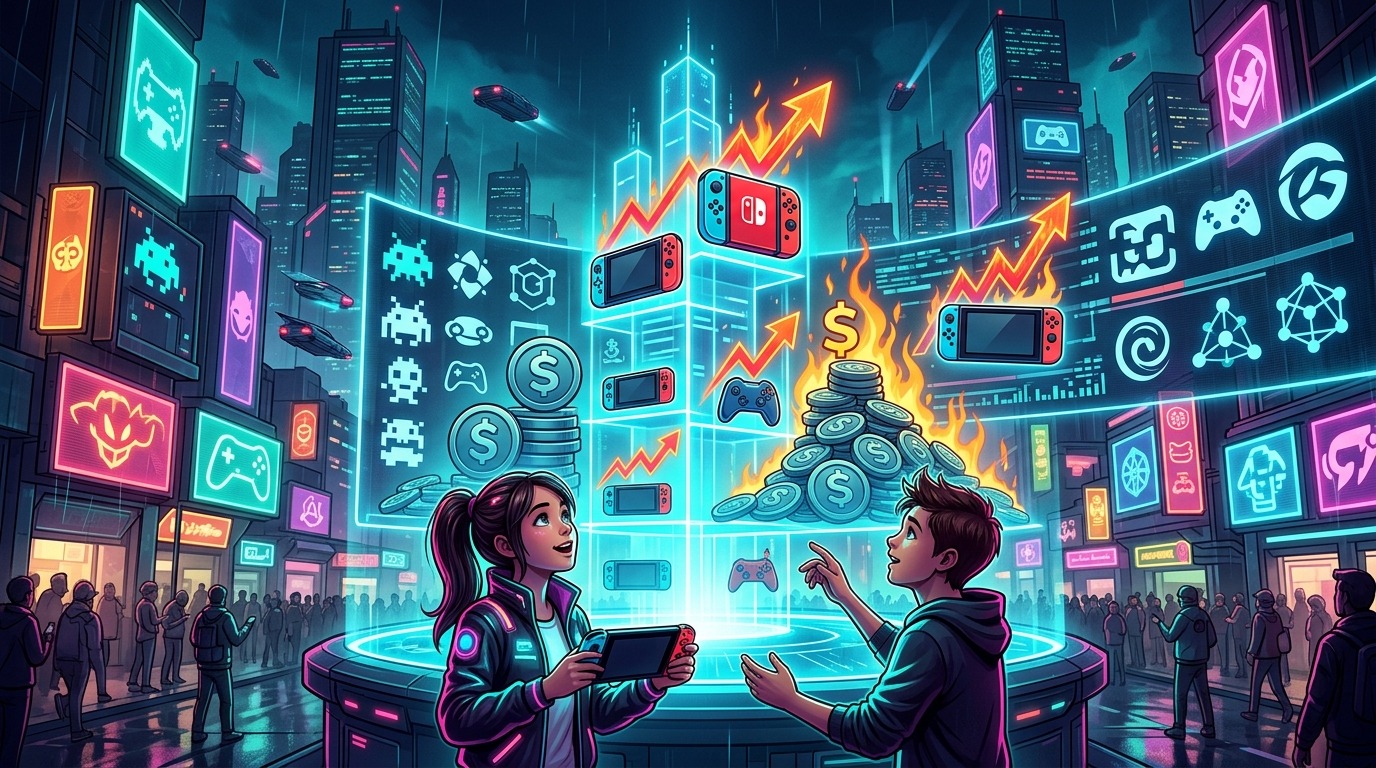
Make no mistake – the era of Nintendo’s affordable consoles has ended. The official confirmation that the Switch 2 will debut on the U.S. market at $499.99 is not just a blow to gamers' wallets but a fundamental shift in the company's strategy. Starting September 1st, both in the US, Canada, and Europe, you'll need to dig deeper into your pocket to join the next generation. This isn't a minor adjustment – it’s a pivotal turn in the industry.
| Title | Switch 2 |
| Genre | Hybrid Console |
| Developer | Nintendo |
| Publisher | Nintendo |
| Release Date | 2024 |
| Platforms | Portable Console / TV |
| Cover Image | Nintendo |
Key Takeaways:
- Switch 2 priced at $499.99 in the US marks a turning point in Nintendo's pricing strategy.
- The hike results from rising component costs, especially RAM and SoC technology, and global logistics changes.
- The Japanese market will feel the changes first on May 25th at 59,980 yen.
- Analysts suggest competitors may follow Nintendo's lead to maintain high price points.
The End of an Affordable Era
Kyoto has been shaken – not by an earthquake, but by hard numbers. The dream of an affordable hybrid console is over. Switch 2 enters the market at a price that’s pushing the psychological barrier. This isn't rumor or speculation – it's a concrete business decision that reshapes the entire industry.
The official explanation cites “changing market conditions,” but there's more behind it. Investors are demanding higher margins. Component costs, particularly RAM, have become an unbearable burden for Nintendo. Every extra cent spent on memory chips means millions more in production costs.
Nintendo’s rhetoric is measured but cold. They speak of “supporting appropriate regional alignment.” Simply put: global inflation and rising logistics costs forced the company to abandon its image as a budget-friendly option. Moreover, the price hike affects not only the new hardware – the entire Switch family and the Nintendo Switch Online subscription will see increases. This looks like a major restructuring of revenue streams.
The Architecture of Costs: RAM as an Adversary
The average gamer rarely thinks about operating memory, but it’s the key factor here. The Switch 2, in order to run current AAA titles, needs to shift to faster LPDDR5/5X memory. Their prices are highly volatile. Although semiconductor shortages are less discussed now, the AI and server sectors are absorbing most of the market. Nintendo, ordering millions of units, hit a wall of corporate contracts. Every additional cent per RAM chip translates into millions in production costs – a decisive argument for Nintendo's accountants.
Also worth noting is that modern SoC architectures, likely based on NVIDIA's recent platforms, require advanced cooling solutions that add significantly to the bill of materials.
Domino Effect: From Sony to Microsoft
Let's be clear – this isn't just Nintendo's problem. The price hikes are part of a larger puzzle. Remember when Sony raised PlayStation 5 prices? Analyst Piers Harding-Rolls predicted this months ago. At Microsoft, the mood isn't great either. Asha Sharma admitted that RAM costs are casting a shadow over project Helix. This is a systemic crisis, not a one-off Nintendo decision.
The Technological Arms Race
Why are costs skyrocketing? For years, Nintendo operated on older architectures, which allowed for cost optimization. However, the switch to the Switch 2 requires modern processors and much faster memory. This technological leap costs a fortune. Analysts agree that a $450 price point would yield negligible margins.
Regional Analysis: Japan as the Pioneer
The Japanese market will feel the changes soonest – as early as May 25th. The price of 59,980 yen is the result of tensions between the local currency and global semiconductor import costs. Nintendo is in crisis management mode to protect its domestic margins from exchange rate fluctuations.
Global Crisis Logistics
Add to this the cost of transportation. Sea and air freight have become nearly 30% more expensive compared to pre-pandemic levels. Nintendo, with its massive global distribution network, feels this directly. Will consumers feel this only in the console price? Unlikely. Expect leaner retail packages, with extras or free game codes disappearing from the boxes.
Will Gamers Accept the New Standard?
The million-dollar question: will fans swallow this? History shows that when a brand owns strong IP like Mario or Zelda, price becomes a secondary concern. However, Nintendo now faces new competition – the PC handheld market. Steam Deck and ASUS ROG Ally offer an open platform at similar prices, forcing Nintendo to prove that its ecosystem is worth the premium.
Strategic Risk – Expert Perspective
Nintendo's decision is a strategic pivot. Instead of risking lower quality components, the company prefers to risk the price, assuming fan loyalty is inelastic. This mirrors moves seen in 2012 when the mobile market forced more aggressive pricing on home consoles.
Long-Term Effects of the Hikes
Expect the competition to intensify further. When Nintendo raises the price bar, it gives Sony and Microsoft the green light to maintain higher prices for their current-gen consoles. As a result, consumers might face a “price freeze” with fewer discounts and extended console lifecycles.
Consumer Psychology
Will consumers turn away from Nintendo? Unlikely, given their highly loyal fan base. While PC gamers focus on specs, Nintendo fans invest in an ecosystem. A $50 price hike will be quickly accepted if Nintendo delivers a hit like a new Zelda. If Switch 2 is merely an incremental update, however, Nintendo might face a cold reception that forces quick promotions.
Risk Summary
Nintendo is playing a high-stakes game. If the Switch 2 doesn’t deliver quality that justifies that $500 price tag, the brand may face resistance not seen since the Wii U era. Yet from an investor’s perspective, this move is necessary to maintain profitability in an era of technological inflation. It’s not just a price increase – it’s a clear message: advanced technology in your pocket comes at a cost, and the days of cheap gaming are over.
FAQ
When do the new prices take effect in Europe?
September 1st.
Why is Nintendo raising prices?
A combination of changing market conditions and rising component costs, especially RAM and advanced SoC technology.
Are other companies raising prices too?
Yes, Sony and Microsoft are also facing similar challenges, often opting for bundle price increases rather than direct hardware cuts.
What is the new price in Canada?
The new price in Canada is 679.99 CAD.
Will there be a game included in the box?
Due to current market trends and rising production costs, it is highly likely that Nintendo will exclude bundled software to keep the base hardware price at $499.