A $500 Switch 2? Nintendo Goes All In and Gambles with Fan Backlash
Leaks indicate the Switch 2 could cost a staggering $500. Does this mark the end of affordable pricing at Nintendo? Our in-depth analysis explores pricing strategy, market pressures, reputational risks, and the technological dilemmas facing the Kyoto
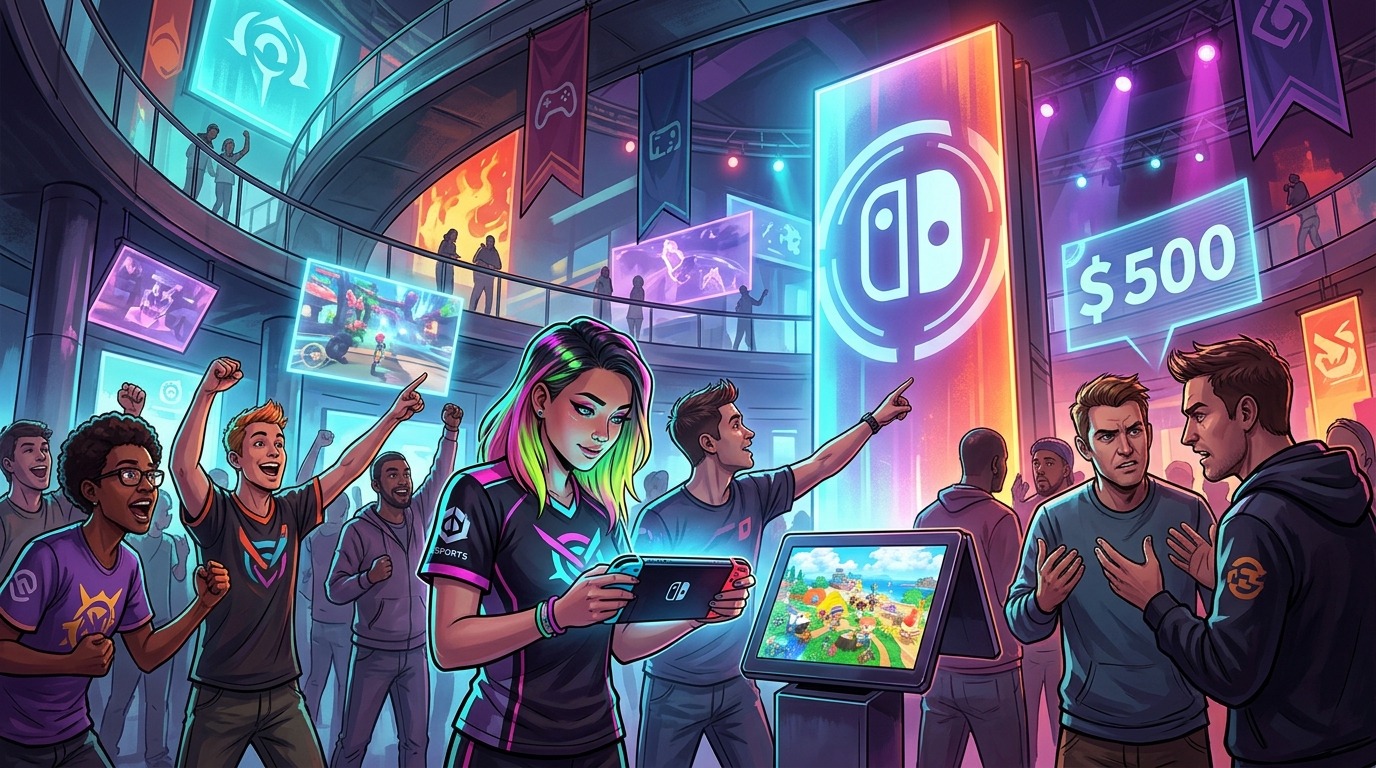
There's no denying it: Nintendo is treading on dangerous ground. Rumors of a $500 price tag for the Switch 2 have stunned both fans and analysts alike. This isn't just a minor price hike—it's a revolution in pricing strategy that could change everything. But is the new console really worth that much?
| Title | Genre | Developer | Publisher | Release Date | Platforms | Cover Image |
|---|---|---|---|---|---|---|
| Nintendo Switch 2 | Hybrid Console (Portable/Home) | Nintendo EPD | Nintendo | Planned Release: Fall 2026 | Nintendo Switch 2 | Nintendo |
Key Takeaways:
- Rumors suggest the Switch 2 could retail for a staggering $500, sparking outrage among Nintendo fans.
- Production costs, especially for components like LPDDR5X memory and Nvidia chips, have skyrocketed, forcing manufacturers to raise prices.
- Nintendo is targeting the premium segment, risking its reputation as an affordable option for all gamers.
Price War – How is Nintendo Handling It?
Without a doubt, the console market is experiencing a true tempest. It all began with rumors of an astronomical price for the Switch 2—$500. This is a bitter pill for fans who have long relied on Nintendo's affordable products. A company synonymous with cheap and accessible gaming is now entering the premium market.
The reasons are straightforward—production costs are skyrocketing. LPDDR5X memory, advanced processors, and Nvidia graphics chips are no longer cheap. Manufacturers have been pushed to the brink. All indications are that Nintendo no longer wants to pay for investor margins, betting everything on one card.
In this context, it's worth mentioning Nintendo's statements about "changing market conditions" as a justification. But this is just a euphemism to mask the harsh reality of the supply chain. The semiconductor market is simply not the same as before.
Would you pay $500 for the Switch 2? (Yes / No / Depends on launch titles)
New Segment – New Challenges
If the rumors are true, Nintendo has ambitions for the Switch 2 to become a first-party console worthy of competing with the best. In 2017, the first Switch was seen as a "second console," but now it's aiming for the big leagues. This means technologies like ray-tracing with DLSS and smooth 4K in docked mode are no longer wishes but necessities.
In this context, it's impossible not to notice that the competition isn't sleeping. Handheld PCs like the Steam Deck OLED and ASUS ROG Ally X have already set new performance standards. Nintendo must prove that its proprietary ecosystem and exclusive titles offer as much value as the competition's power and openness.
Will the Switch 2 deliver groundbreaking functionality? That's the key question every gamer is asking. If not, the high price could be the deciding factor that deters buyers.
Component Market – A Common Enemy
It's clear that Nintendo isn't alone in this situation. Sony, when designing its next-gen hardware, faces the same problems. Production costs have soared, and the semiconductor industry prefers to produce chips for data centers rather than gamers. This means all manufacturers are paying a premium for capacity.
It's also worth mentioning the pressure from investors. They expect higher margins, which Shuntaro Furukawa didn't deliver during the original Switch era. This is an additional factor forcing Nintendo into radical decisions.
What's Under the Hood?
The key question is: what will be under the hood of the Switch 2? Whispers suggest chips based on Nvidia's Blackwell architecture. If the new console doesn't offer performance comparable to current-gen standards while maintaining portability, gamers will feel cheated. In 2026, consumers will be more informed than ever—comparisons to the Steam Deck or ROG Ally will be inevitable.
Backward compatibility is another critical issue. If Nintendo blocks the ability to run existing Switch libraries on the new hardware, the $500 price tag will be even harder for loyal fans to swallow. In the age of digital distribution, preserving one's game library is an industry standard that customers will demand.
Indies and the Ecosystem – Can Diversity Be Maintained?
It's also worth considering the fate of indie games. The Switch was a promised land for indies. If the high console price limits the user base, developers may start fleeing the Nintendo ecosystem. A smaller player base means less revenue for small studios, which could eventually stifle the eShop.
Nintendo must find a way to attract gamers to the new platform without excluding the developers who built the current model's strength. It won't be easy, but without indies, the Switch 2 could lose its soul.
The Future in the Shadow of Inflation
If Nintendo doesn't showcase technology that justifies that $500 price tag, September 2026 could mark the beginning of the end of their golden age. It's a dance on the edge, where the loyalty of an entire generation raised on Mario and Zelda is at stake. Can the Kyoto giant handle the pressure of these expectations? We'll find out during the official global reveal.
FAQ
Does the price hike apply to all regions?
Leaks primarily concern the US market, but in Europe, currency exchange rates and taxes will likely make the price even higher once converted, potentially reaching the €500-€600 bracket.
Why is Nintendo raising the price?
The company wants to protect its margins. Production costs for memory and processors have skyrocketed, so Nintendo prefers to launch at a higher price rather than lose money on every unit sold, which would be a significant risk in the current economic climate.
Will Switch 2 games also be more expensive?
All signs point to yes. A higher hardware price often becomes the perfect excuse for publishers to raise software prices to a new standard of $70-$80 per title, which is becoming the new "premium standard" for AAA gaming.
Is it worth waiting for the Switch 2?
The decision to buy will depend on the specific offering, technology, and launch titles. If Nintendo presents groundbreaking solutions, the price may be justified. Otherwise, the market may not forgive such a move.
The Future in the Shadow of Uncertainty
In this context, it's impossible not to notice that the gaming market is on the brink of a new era. Rising hardware and software prices are an inevitable trend, but the key is not to lose sight of the core element—the player experience. Nintendo must remember that it's the gamers who make their brand.
It's also worth remembering that the market is full of alternatives. If the Switch 2 disappoints, gamers will turn to the competition. This is an additional argument that should prompt Nintendo to make a well-considered move.
Ultimately, only time will tell if the decision to price the Switch 2 so high was wise. For now, though, it's hard not to feel that Nintendo is taking a big risk. Time will tell if it pays off.