The End of Cheap Gaming? Gaming Hardware Price Hikes Become a Reality
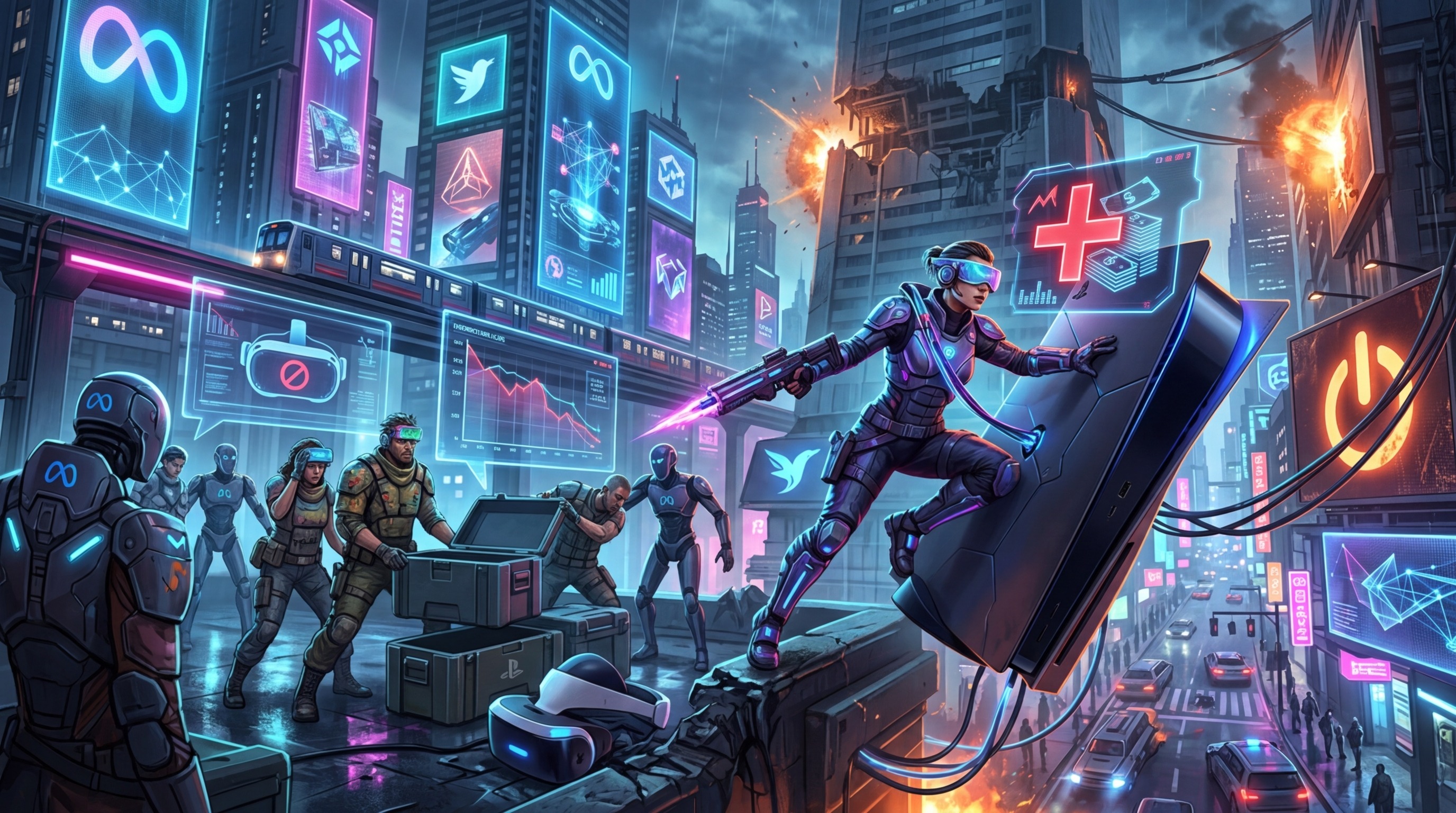
Sony's PS5 price hikes, Meta's layoffs, and rising production costs signal a shift in the gaming market toward premium pricing. Is this the end of affordable gaming?
In recent months, the gaming market has been shaken by a wave of unsettling news. Price hikes for hardware, layoffs at tech companies, and rising production costs are making the dream of affordable gaming equipment increasingly distant. Sony, known for the PlayStation 5, has been forced to adjust prices in many regions, with some sources indicating an increase of up to 18% in the United States. All of this raises questions about whether this is the end of the era of cheap gaming.
| Title | PlayStation 5 |
| Genre | Console |
| Developer | Sony Interactive Entertainment |
| Publisher | Sony Interactive Entertainment |
| Release Date | 2020-11-12 |
| Platforms | PlayStation 5 |
| Cover Image | Sony |
Key Takeaways:
- PS5 – Further price hikes in response to global economic challenges.
- Meta cutting jobs in VR, signaling difficulties in the virtual reality sector.
- Nintendo, despite its history of affordability, also faces pressure from rising costs.
- The arrival of the premium era – rising hardware and game prices may force gamers to seek alternative access models.
PS5 and Global Economic Challenges
The PlayStation 5, as Sony's flagship console, has become a barometer of change in the gaming market. The price hikes we've been observing across various markets in recent months are not coincidental. Many experts emphasize that rising production, logistics, and energy costs have a direct impact on pricing decisions. For example, in the UK, the PS5 price jumped by about £90, which translated into a real increase in costs for consumers.
The pressure on profit margins is immense. Manufacturers are finding it increasingly difficult to maintain current prices in the face of rising component costs, such as RAM and display panels. It's worth looking at how these changes affect purchasing decisions – many people are starting to look for alternatives, such as PC or cloud gaming.
In the face of these challenges, the industry is changing. Premium prices are becoming the norm, which could undermine previous expectations of gamers. Some analysts warn that further price hikes could negatively impact the entire market.
Meta and Virtual Reality in Times of Change
Meta, known for its Metaverse project, has also not been immune to problems. Layoffs in the Reality Labs division are a clear signal that the VR market faces significant challenges. Despite ambitious plans, achieving profitability in the virtual reality sector is proving more difficult than expected.
The Director of Games at Meta, during one of the conferences, assured of dynamic development: "We've a lot going on – new hardware, new audiences, new games." While these words are full of optimism, they do not hide the fact that VR hardware is often perceived as too expensive for the average consumer.
It is also worth adding that rising video game production costs are forcing the entire industry to adapt. Developers are looking for savings, which could affect product quality. In this context, further price hikes for hardware are becoming inevitable.
Nintendo and Survival Strategies
Nintendo, which for years has based its strategy on affordability, is also grappling with the pressure of rising costs. Experts note that further price hikes for hardware could force the company to reassess its pricing policy. Although Nintendo has long maintained competitive prices, current market realities may change that.
In the face of global challenges such as rising production costs or supply chain instability, Nintendo has to make tough decisions. As analysts point out, further price hikes not only affect developers' margins but also the entire marketing strategy.
Resident Evil and Quality Promotion
Amidst all this chaos, there are positive examples to be found. Capcom, known for the Resident Evil series, shows that product quality can attract gamers even in difficult times. Recently, an expanded photo mode was added to Resident Evil 4 Remake, which was enthusiastically received by the community.
Capcom demonstrates that investing in quality and listening to gamers' expectations can translate into commercial success. The game has sold over 6 million copies, showing that the market values high-quality products, even if prices rise.
Impact on Gamers' Wallets
In light of these changes, it's worth considering how hardware and game price hikes can affect our wallets. There is a growing risk that further price increases will make our hobby significantly more expensive to maintain. It's worth considering whether it's worth using subscriptions like Game Pass or PS Plus instead of buying every new release at full price.
The gaming industry is changing, and we must adapt to new realities. Product quality can be our counterbalance to inevitable price increases. It’s worth keeping an eye on the market and making informed purchasing decisions to enjoy our favorite entertainment without unnecessary sacrifices.
FAQ
Is the PS5 actually getting more expensive?
Yes, Sony has officially raised prices in many regions. It is worth tracking local retailers, as the suggested retail price has shifted throughout 2024.
Will Microsoft and Nintendo also raise prices?
Analysts like Piers Harding-Rolls believe it is highly likely due to mounting costs for components such as RAM and display panels.
Is Meta actually reducing staff in its VR division?
Yes, the Reality Labs division has conducted layoffs, signaling difficulties in achieving short-term profitability for VR projects.
Does the Tomodachi Life demo have a serious bug?
Yes, players report a bug where Miis get stuck in a loop of advertising lines, which discourages further play.
Did Resident Evil receive a significant update?
Yes, Capcom added a robust photo mode with advanced character pose controls, which was widely praised by the community.