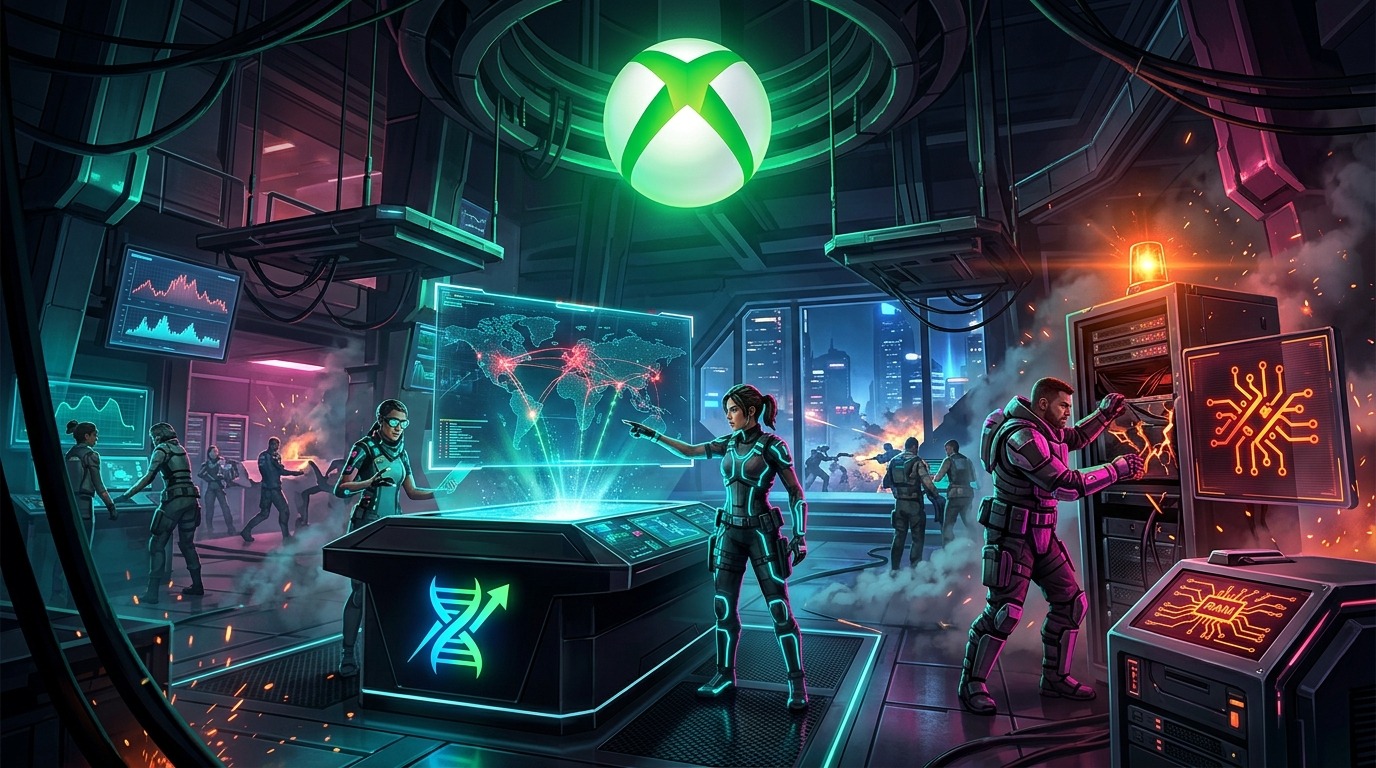
Project Helix and the RAM Crisis: Will the New Xbox Become a Luxury Item?
Soaring RAM prices threaten Project Helix's future. Microsoft faces a dilemma: high retail prices, limited quantities, or hardware compromises? We analyze the implications for consumers and the gaming industry.
As we approach the next generation of consoles, we're navigating a minefield of supply chain issues that are turning Microsoft's plans upside down. The main culprit is the skyrocketing cost of RAM, forcing a reevaluation of the entire Project Helix deployment strategy. Will the new Xbox become a symbol of inaccessibility, with its price crossing psychological barriers?
| Title | Project Helix |
| Genre | Next-Gen Console |
| Developer | Microsoft |
| Publisher | Microsoft |
| Release Date | Unconfirmed (planned around 2027/2028) |
| Platforms | Xbox |
| Cover Image | Xbox |
Key Takeaways:
- Global RAM shortages, driven by AI demand, are increasing Project Helix's production costs.
- The new Xbox's retail price could exceed $400-450, placing it in the premium product category.
- Microsoft is considering compromise solutions such as hybrid architecture or price tiers to maintain affordability.
- Lack of stabilization in the semiconductor market could delay the launch by several quarters.
What Does This Mean for Gamers?
All signs point to the inevitable arrival of the era of expensive consoles. Pressure on the supply chain, especially in the memory segment, is eroding manufacturers' margins. Microsoft must decide: either release a device costing up to $450, risking lower sales, or cut the specification, which could expose the project to comparisons with the previous generation. This is a dilemma that no player in the market can ignore.
Analysts warn that if component prices don't ease, Project Helix could become a symbol of inaccessibility. History shows that devices priced above a certain threshold often fail to achieve mass appeal. For Microsoft, this means a challenge: how to maintain the momentum of Xbox Game Pass while keeping the new hardware affordable.
In such circumstances, there are voices suggesting that Microsoft should take a risk and offer a budget variant – perhaps without an optical drive, with less built-in memory. Such a strategy would allow reaching a wider audience, especially in countries with lower purchasing power. However, all indications suggest that the company doesn't want to repeat the mistakes of the past, when the Xbox One suffered from ill-considered strategic decisions.
How is Microsoft Trying to Navigate These Pitfalls?
The company from Redmond is not idle. It's developing a strategy that takes into account market realities. A key element will be a hybrid architecture, combining local computing capabilities with cloud power. This way, even if the physical console doesn't have the highest specs, it can leverage Azure resources in the cloud. However, this requires a stable internet connection – a barrier that cannot be circumvented in many regions of the world.
Other solutions are also in play. Microsoft may decide to gradually introduce new hardware, focusing on markets where price is less of a factor. They might also return to the idea of consoles with different performance levels – as with the Xbox Series S and X. This, however, does not eliminate the fundamental problem: the cost of producing a base unit.
Will the Market Accept an Expensive Xbox?
This question has no easy answer. Many gamers, especially in Poland, have become accustomed to consoles priced at around $300-400. Crossing this threshold could result in decreased interest. It's also worth remembering that the competition – Sony with PlayStation – is also grappling with similar issues. If Microsoft decides on a $450 price point, it could open up room for alternative solutions, such as PCs or handhelds.
It's also important to consider the economic context. Rising inflation and declining purchasing power mean that even minor price increases can be felt. For Microsoft, however, the priority remains maintaining its position as a leader in the subscription services market. If Project Helix is to be an attractive device for Game Pass, its price cannot be too high.
What Does This Mean for the Future?
The Project Helix situation is not just the story of one console. It's a case that illustrates how the technology market is changing. Pressure from AI, competition for resources, and rising graphical demands are driving up the costs of producing gaming hardware. This could be the beginning of an era in which consoles are no longer as ubiquitous as they are today.
For gamers, this means having to accept new realities. If they want to use the latest technologies, they'll have to pay more. The alternative could be longer use of current devices or moving to the PC market, where component prices are equally unstable. This, however, doesn't change the fact that Project Helix is a groundbreaking project that could set new standards.
FAQ
Will Project Helix definitely be expensive?
Yes, all indicators suggest that the price of the new Xbox could significantly exceed the previous generation. The final decision, however, depends on the stabilization of the RAM market.
What are the alternatives to Project Helix?
Players can consider sticking with current consoles, moving to PC, or exploring handhelds. The market offers many possibilities, although each has its pros and cons.
Will Microsoft lower the price in the future?
Most likely, yes, but it will be a gradual process. History shows that console prices fall over time, especially after launch.
What are the forecasts for the future of the console market?
Analysts agree: the market will evolve towards a local-cloud hybrid approach. This, however, doesn't change the fact that physical consoles will remain an important part of the ecosystem, especially for gamers with unstable internet connections.