Graveyard Keeper 2: Shadows of Suspicion, AI, and the Battle for Player Trust
When fans of Graveyard Keeper spotted unsettling details in promotional graphics, the internet erupted with AI accusations. Has Lazy Bear Games lost its soul?
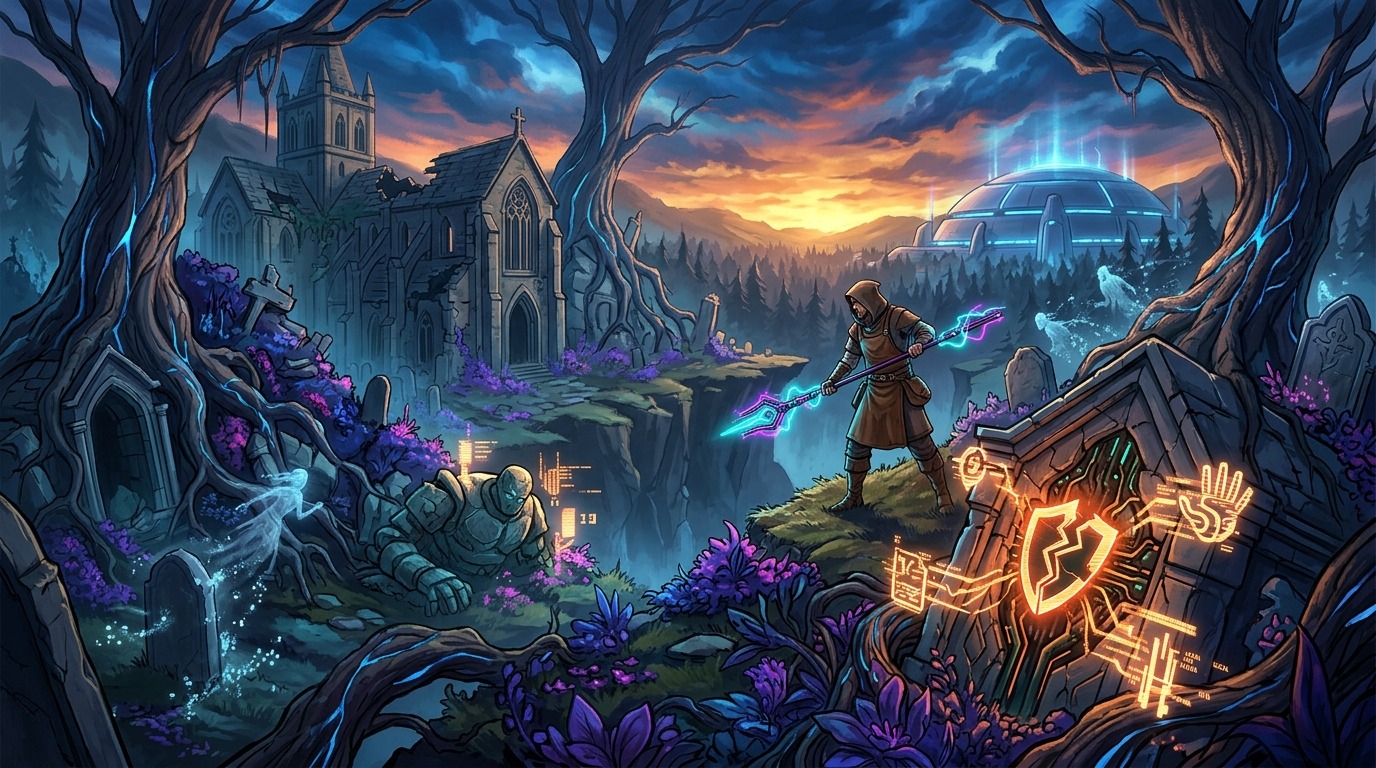
The indie gaming scene, where trust is a hard-earned currency, has been thrown into turmoil with the announcement of Graveyard Keeper 2. Instead of cheers, the reveal was met with a wall of cold skepticism. When Lazy Bear Games unveiled the first promotional materials, the community – hyper-vigilant for any hint of generative AI – immediately drew battle lines. One odd visual detail was enough to ignite a firestorm of accusations. Is this justified, or is it a symptom of collective paranoia in an age of digital uncertainty?
| Title | Graveyard Keeper 2 |
|---|---|
| Genre | Simulator, RPG |
| Developer | Lazy Bear Games |
| Publisher | tinyBuild |
| Release Date | 2026 (expected) |
| Platforms | PC (Windows, macOS, Linux), Console (PlayStation 5, Xbox Series X/S) |
| Cover Image | Graveyard Keeper 2 |
Key Takeaways:
- Accusations of AI usage in Graveyard Keeper 2's art have sparked a firestorm among fans.
- Lazy Bear Games vehemently denies the allegations, emphasizing their manual creative process.
- The controversy reveals a deep anxiety among gamers about the loss of human touch in game production.
- This debate highlights the urgent need for transparency in creative processes in the age of generative technologies.
The Genesis of Controversy: Does AI Threaten the Indie Soul?
The phenomenon of Graveyard Keeper has always resided in its unique, dark humor and painstakingly handcrafted, macabre atmosphere. Fans who adored the first installment cherished it as a genuine work of craftsmanship. When the first trailers for the sequel appeared, however, the community detected subtle, unsettling shifts in the visual style. These minute nuances in character geometry or background details ignited a firestorm of suspicion. Players, increasingly aware of AI's potential, began seeing 'tells' they believed revealed automated generation.
Yet we should ask: is our perception of art really so fragile that a single misaligned pixel can shatter years of built reputation? Or is this simply an evolution of style, as the developers claim? In an era flooded with generic assets, authenticity has become an invaluable currency. This uncertainty between technology and human passion lies at the heart of the conflict surrounding Graveyard Keeper 2.
For many enthusiasts, AI in game development represents more than just a quality concern – it symbolizes a loss of control over what we love. It is a fear that our cherished virtual worlds will soon be manufactured by algorithms rather than talented artists. Is artistic quality measured by the method of creation, or by the emotional resonance of the final product? This is the central question dividing the community.
A Voice from Within: Lazy Bear Games Responds
In the eye of the media storm, studio co-founder Slava Cherkasov took to Reddit to address the mounting accusations. His public experiments with AI models – initially seen as mere technological curiosity – became, for some fans, 'proof' of deeper, more troubling intentions. Consider his exact words: „Yes I'm experimenting with every AI model I can find. This is what every tech guy should do now.”
Yet this honesty failed to calm the waters. For many players, such experiments represent a slippery slope toward full implementation. The studio stands firm in its denials, insisting that these tools have no place in their creative process and that any perceived similarities to AI art are mere coincidences stemming from the natural evolution of their graphic style. Is this explanation enough?
This controversy is not an isolated incident. It reflects a broader trend where the gaming community has become a detective force, scrutinizing every shadow and geometric inconsistency for signs of AI generation. This serves as a stark warning to developers that in the current climate, transparency in creative processes is as vital as the quality of the product itself. Given the industry's pressures regarding crunch and deadlines, the temptation to use AI is immense, making every developer statement subject to intense scrutiny.
Why the Fear of AI in Game Development?
The issue runs deeper than aesthetics. Graveyard Keeper earned its devoted following through its unique blend of dark humor and meticulously crafted pixel art. Fans now fear that automation might produce a soulless, generic product devoid of the spark that made managing a cemetery so compelling. In an age of generic asset floods, human artists have become the ultimate guarantors of quality and brand identity.
The controversy surrounding Graveyard Keeper 2 is emblematic of a wider trend. The gaming community has turned detective, analyzing every visual detail for signs of automated generation. This underscores a critical message for developers: in today's climate, transparency in creative processes is as crucial as code optimization. With industry pressures and tight deadlines, the temptation to use AI for asset creation is strong, making every developer statement subject to rigorous examination.
Will Words Be Enough to Rebuild Trust?
Lazy Bear Games now finds itself under intense scrutiny. They must prove their integrity not with words, but with a final product that speaks for itself. Will fans extend them the benefit of the doubt, or has judgment already been passed in the depths of online forums? Only time will tell whether the only ghosts haunting this graveyard are the ones intended by the developers, or if the specter of AI will linger until launch. If the game retains its macabre charm and signature humor, the AI allegations may quickly fade into the background, giving way to discussions about gameplay itself. After all, a good game is a good game, no matter its origins.
FAQ
Does Graveyard Keeper 2 use AI-generated graphics?
The developers have explicitly denied using AI for the game's art or development assets, stating the work is done by their internal team.
Why did fans start these accusations?
Concerns were sparked by the style of the promotional art and the co-founder's public interest in AI research, which many fans interpreted as a precursor to adoption.
How many artists work at Lazy Bear Games?
The studio employs an internal team of artists responsible for the game's visuals, all of whom are human professionals.
Is AI in game development becoming a standard?
While many studios use AI for optimization, there is a significant pushback from the indie community against using generative models for creative output like art and writing.