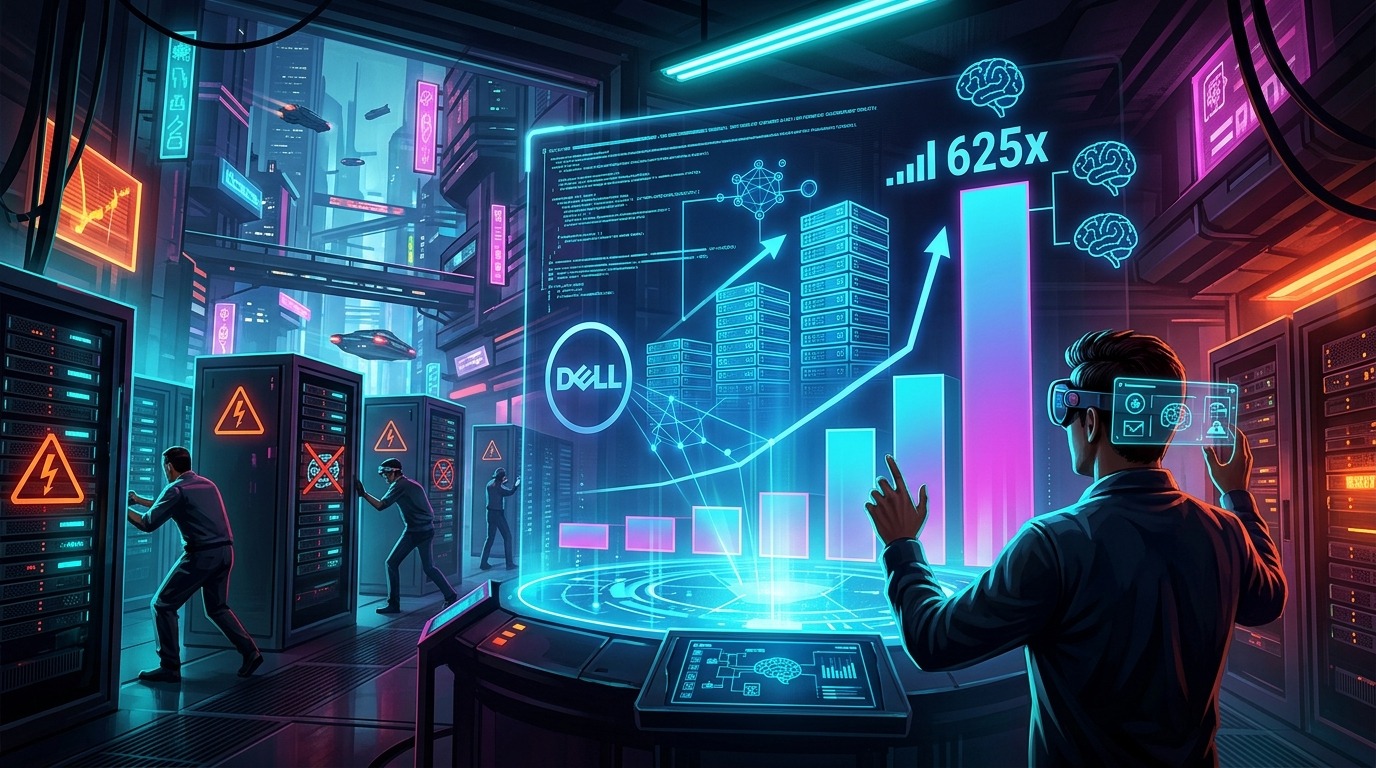
AI Devouring RAM: Michael Dell Explains How AI Will Reshape the Hardware Market for Gamers
Dell CEO forecasts AI-driven RAM demand surge. Prices for gaming hardware and consoles to rise for years. Pre-built PCs could see 15-20% price hikes as AI consumes semiconductor resources, leaving gamers facing higher costs.
Michael Dell, CEO of Dell Technologies, minces no words: AI’s hunger for RAM memory is so immense that demand is set to surge 625-fold. This forecast isn’t mere speculation – it’s a cold analysis of data center trends that are already draining the memory market, leaving gamers with scraps. If this vision materializes, the era of affordable hardware will end, and every new PC or console could cost a fortune.
| Title | AI vs. Gaming Hardware Affordability |
|---|---|
| Genre | Market Analysis / Industry Insight |
| Developer | N/A – Industry Trend |
| Publisher | Dell Technologies / Industry Analysts |
| Release Date | 2024 (ongoing trend) |
| Platforms | Global Semiconductor Market |
| Cover Image | Dell Technologies |
Key Takeaways:
- Michael Dell’s forecast indicates a 625-fold increase in RAM demand for AI infrastructure.
- Consoles like PlayStation 5, Xbox Series X/S, and future generations may see price hikes due to rising component costs.
- Analysts predict pre-built PC prices could surge by 15-20% in coming years.
- Rising memory demand translates to shortages and higher prices for gamers, who lack the purchasing power of tech corporations.
AI’s Insatiable Appetite – The Math Reshaping Gaming
Michael Dell isn’t one to speak in hypotheticals. His forecast of a 625-fold surge in RAM demand for AI infrastructure is rooted in hard data. The Dell Technologies CEO points out that the RAM market isn’t elastic – massive AI projects are gobbling up resources meant for gamers. This isn’t some distant future scenario; it’s a process already draining the market.
The situation is straightforward: each new AI accelerator, like those from Nvidia, requires ever more memory, while the scale of data centers grows exponentially. Manufacturers like Samsung, SK Hynix, and Micron are redirecting all production capacity to where the money flows fastest. For the average gamer or console maker, only leftovers remain – at astronomical prices.
Real Consequences for Gamers and Consumers
The crisis we’ve dubbed “RAM-geddon” stems from this unequal competition. Tech giants and hyperscalers are taking all. For gamers and console producers, only scraps remain – and astronomical invoices. Developers and hardware manufacturers can’t create new generations without reliable component access. We’re already seeing the effects: PlayStation 5 and Xbox Series X/S prices have risen, despite their age, due to production costs. Valve openly admits struggles securing enough RAM and SSDs for devices like Steam Deck. Analysts predict pre-built PC prices could jump 15-20%. Building your own rig is becoming a luxury.
Everything with a memory module is now in the crosshairs of corporations building AI infrastructure. Dell’s key takeaway is stark: memory production expansion takes years, while AI demand shows no signs of slowing. We’re in the early stages of adoption. This isn’t a problem that will vanish after a good quarter. We’re at the start of a long wave where AI will consume most semiconductor resources. 2026 is already being called the “most challenging year in history” by component makers – and that’s just the beginning.
Do you think PC component prices will surge by at least 20% in the next two years?
Market Strategies and Inevitable Price Hikes
Let’s be clear: this won’t disappear after one good quarter. We’re at the start of a multi-year wave where AI will consume the lion’s share of semiconductor resources. Industry insiders are already calling 2026 the “most challenging year in history.” Food for thought. In this game, the winners are clear: memory manufacturers and Nvidia. Their accelerators, like the Blackwell B200 with 192 GB HBM3e, dictate market terms. The losers? Gamers, tech enthusiasts, smaller developers. The entire consumer entertainment sector lacks the capital to compete with cloud giants.
Resource Wars – Corporations vs. Consumers
Dell’s forecast is based on Nvidia’s strategy of building units with massive HBM memory. It’s their main advantage. More memory per GPU means larger models can be trained. But this creates a domino effect – the market adapts to Nvidia’s requirements, and everyone else pays the price. For anyone planning a PC or console purchase, the implications are clear: protect your current hardware. A graphics card or RAM failure could mean not just cost, but long waits for replacements. Monitor cloud gaming trends – services like GeForce NOW may become the only viable alternative when local component prices skyrocket. Don’t expect quick drops. The trend is upward, with no signs of reversal. The era of cheap gaming is ending. AI is rewriting the rules, and we’re footing the bill.
FAQ
Will RAM prices drop soon?
Unfortunately not. Most analyses indicate sustained high prices until at least 2026 due to massive AI sector demand.
Will AI impact the next generation of consoles?
Yes, component cost increases will likely affect prices for future consoles, such as PlayStation 6 or the next Xbox generation.
Should I buy hardware now?
It’s better not to wait if your current hardware is failing. There’s no indication that component prices will drop significantly in the next 24 months.