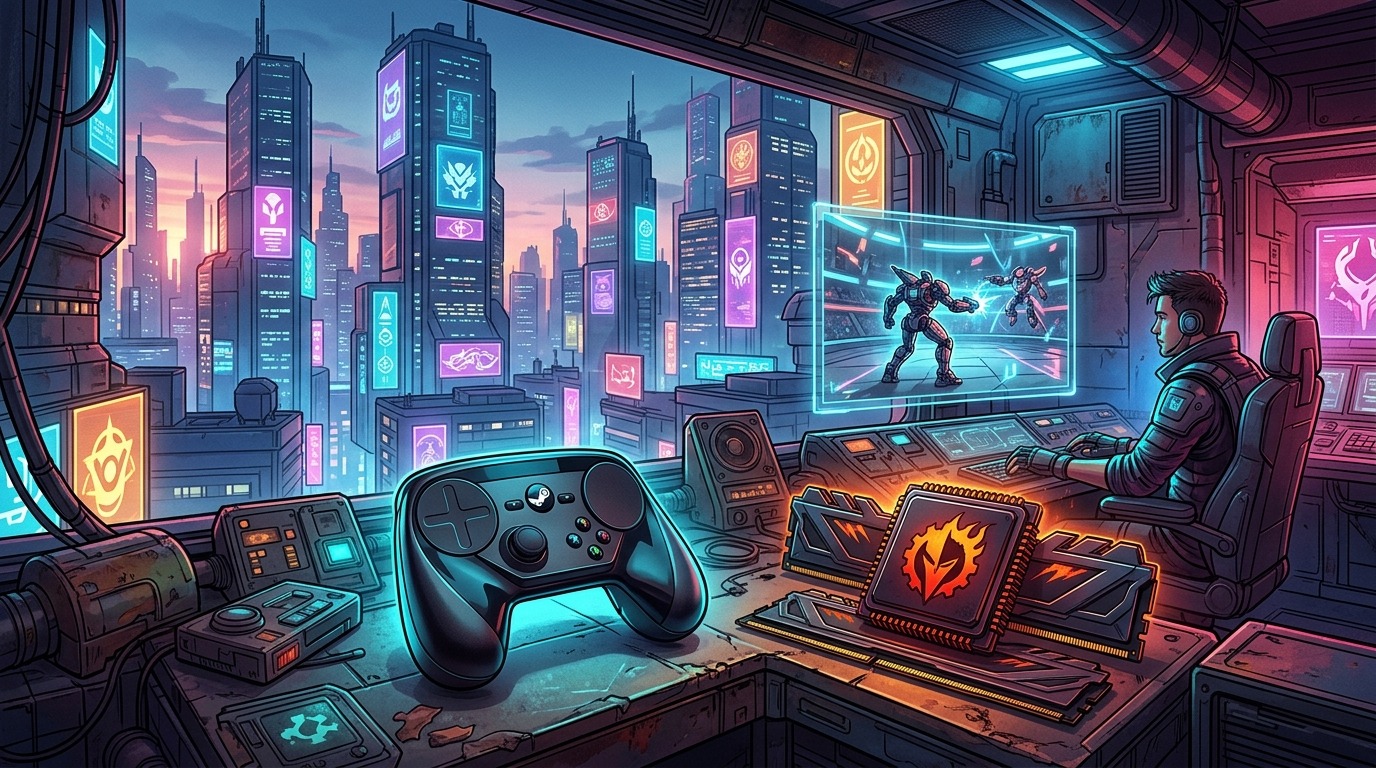
Valve’s Hardware Strategy: Steam Controller vs. RAMaggedon
We analyze why Valve is prioritizing the Steam Controller while the Steam Machine faces global supply chain bottlenecks.
The Truth About Valve’s Delays
In the tech world, there is a silent but brutal war for resources. While fans eagerly await the launch of the Steam Machine and the Steam Frame VR headset, Valve faces a reality they cannot circumvent: the global memory crisis. This phenomenon, known as RAMaggedon, fueled by massive demand from AI data centers, is effectively stalling release schedules for the industry's biggest players. This is a real problem that has turned product roadmaps into hostages of supply chains. There is no room for optimism here, only hard calculation regarding component costs and availability.
The Steam Controller’s Independence
In the face of rumors about Valve intentionally holding back the controller to match the release schedule of other devices, Valve has finally broken its silence. Lawrence Yang, a key designer at Valve, addressed the hardware availability directly. It turns out the controller has a strategic advantage—it is essentially immune to the current component crisis.
"Thankfully, there’s no RAM or storage inside of it."— Lawrence Yang
This statement changes everything. While the Steam Machine requires advanced memory modules whose prices have skyrocketed, the Steam Controller enters the market without those dependencies. It is pure engineering that is resilient to market fluctuations. Instead of struggling with chip shortages, Valve was able to focus on finalizing firmware and mass-producing the physical controller, allowing for a healthy stock level before launch day. Yang made it clear that the launch is purely a result of the controller being ready, not a forced scheduling maneuver.
Why the Steam Machine Waits
Let's be clear: Valve cannot manufacture the Steam Machine at a scale that would satisfy the market without overpaying for every memory module. In February, the company officially announced a reevaluation of pricing and launch dates for its more advanced projects. This is not a matter of poor management—it is a matter of scale that every corporation must face. During GDC, Valve representatives hinted that they were in the market to buy any available RAM, but the priority clearly lies with the AI sector. The current desperation translates into real delays for projects requiring advanced electronics.
Logistical Challenges in the Shadow of AI
Valve’s situation is not an isolated incident. The PC industry as a whole is experiencing unprecedented pressure on components. Tech giants building AI infrastructure are buying up HBM and DDR5 memory supplies, which drastically raises costs for consumer electronics manufacturers. For a company like Valve, striving to maintain a competitive price for their hardware, this means navigating thin margins. Every week of delay for the Steam Machine represents a search for new suppliers or price negotiations that would allow them to avoid passing costs onto the gamer.
The "Safe Harbor" Strategy
This strategy allows Valve to remain relevant in the consumer’s mind while engineering work on the Steam Frame and Steam Machine continues behind closed doors. By splitting the launch, Valve is not only managing expectations but also protecting its financial liquidity. This is a move by a mature market player focusing on stability in uncertain times.
Technical Analysis: Why the Controller Succeeds
It is worth noting that the Steam Controller is not just a "simple" device, but the result of years of research into ergonomics and precision. While devices like consoles or VR headsets require immense computing power, the controller is a peripheral that relies on efficient radio communication and sensors. The lack of need for NAND memory or RAM sticks makes the manufacturing process significantly less complex. This allows Valve to control the supply chain with surgical precision, eliminating the risk of downtime on assembly lines. It is an engineering marvel that, during this crisis, has become the company's greatest asset.
Is Valve Changing Course?
Despite assurances of a 2026 release, many analysts wonder if Valve is considering changing the architecture of its other devices. If the RAM crisis persists, engineers may be forced to drastically optimize hardware, which could impact the final performance of the Steam Machine. Valve is known for not releasing unfinished products, but the pressure from the market is immense. The company finds itself in a situation where every month of delay is a fight to maintain a technological edge over competitors who are also struggling with component limitations.
Comparison to Historical Errors
The situation mirrors early component availability issues in the PC industry, though the scale is incomparably larger. Valve is learning lessons that other hardware manufacturers took years to master—you do not build hype around a device that cannot be mass-produced at a low cost. This distinguishes today’s Valve from many other market players who often promote gear long before solving their underlying logistical nightmares.
What This Means for You
For gamers, this means one thing: the Steam Controller is ready. Valve confirms that the hardware, firmware, and software are finalized. Instead of waiting for a joint debut of all three devices, the company decided to split the launch. This is pragmatism that could save the 2026 financial balance sheet. The Steam Machine and Steam Frame remain in the refinement phase, but the controller will set the standards in the coming months. Consumers get a product that simply works, which, in the face of today’s industry-wide woes, is a rare quality indeed.
A Commitment to Long-Term Repairability
It is also worth noting that Valve isn't just concerned with availability but also with the long-term viability of its products. The controller has been designed with modularity in mind, a nod to a community that increasingly values sustainable and repairable electronics. Unlike "black box" devices from competitors, the Steam Controller aims to be a product that lasts for years. This philosophy builds a layer of trust that is often missing from major tech launches, proving that Valve knows customer loyalty is far more valuable than a quick buck from disposable hardware.
FAQ
Does the Steam Controller require RAM updates?
No, the device is designed without RAM or storage, making it unaffected by current component shortages.
Why is the Steam Machine delayed?
The main cause is the global shortage of RAM and rising component prices fueled by the AI sector's expansion.
Will Valve release the Steam Machine in 2026?
Valve remains committed to a 2026 launch window, though specific dates remain dependent on the stability of the memory supply chain.