Rocket League on Unreal Engine 6: Psyonix Sets New Industry Standards
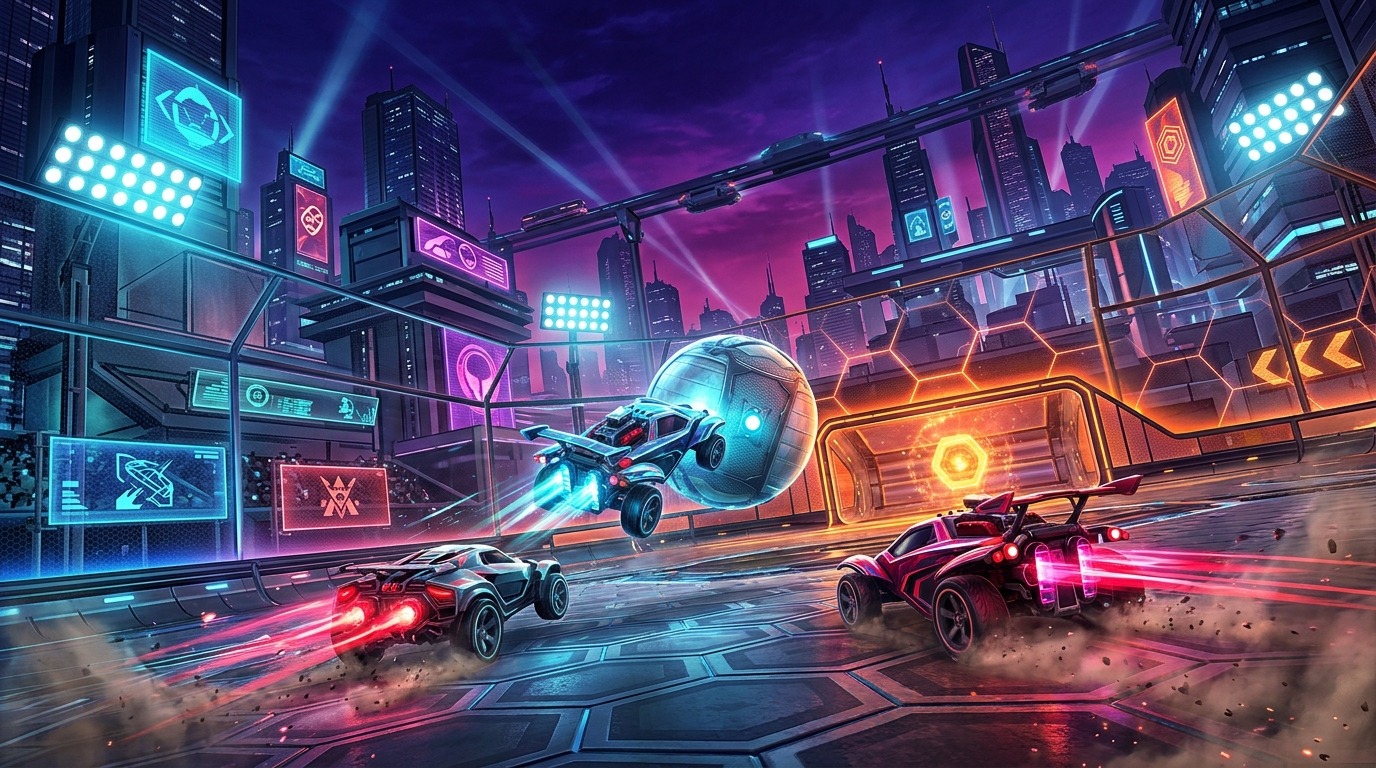
Rocket League is transitioning to Unreal Engine 6, marking more than just a visual upgrade. It serves as the foundation for the next generation of esports and advanced game physics, setting new industry standards.
During the Rocket League Championship Series 2026 in Paris, the gaming industry received not only a sports spectacle but also a clear message about a changing era. Psyonix, a studio operating under the Epic Games umbrella, unveiled a project that is generating a wave of excitement: Rocket League fully integrated with the Unreal Engine 6 environment. This event goes beyond a simple technical update.
| Title | Rocket League |
| Genre | Sports action game, arcade |
| Developer | Psyonix |
| Publisher | Epic Games |
| Release Date | Planned UE6 update: around 2027 |
| Platforms | PC, PlayStation 5, Xbox Series X/S, Nintendo Switch |
| Cover Image | Rocket League on Unreal E... |
Key Takeaways at a Glance:
- The transition to UE6 is a technological breakthrough for Rocket League, affecting physics, responsiveness, and visual quality.
- The new engine will allow the elimination of issues such as ghost hits and significantly improve synchronization in esports.
- Deploying UE6 opens the door to more advanced features like dynamic arenas and better optimization.
- Rocket League is becoming a technology pioneer that could set new standards for other live-service games.
The Beginning of a New Graphics Engine Era
The event in Paris was no accident. Psyonix carefully chose the venue and time to demonstrate that Rocket League is not just evolving, but becoming a laboratory for modern technologies. The transition to Unreal Engine 6 is a declaration that the studio wants not only to maintain its advantage but significantly increase it. This decision has a broader context – it shows that the video game market is increasingly boldly reaching for the latest technological solutions, which not only improve visual impressions but above all affect physics and stability.
So far, Rocket League has been based on an engine that increasingly encountered limitations over time. Transitioning to UE6 is not just about 'better graphics' – it is a complete overhaul of the rendering pipeline, aiming to eliminate the limitations imposed by older engine versions. Moreover, this change could liberalize the market, showing that moving to modern engines is necessary to maintain competitiveness.
Transitioning to a New Standard: Why It Matters
It has been only a few years since the release of Unreal Engine 5, and we are already witnessing preparations for the next technological leap. Choosing Rocket League as the pilot for UE6 makes strategic sense. The game relies on extremely precise physics and responsiveness, so any engine flaw would be immediately apparent. Moving to a new architecture is not just about 'better graphics' – it is a complete overhaul of the rendering pipeline, aiming to eliminate the limitations imposed by older engine versions.
It is also worth remembering that Rocket League has always been a game that required exceptional precision from players. Every millimeter and every millisecond of delay could decide the outcome of a match. Therefore, transitioning to a new engine has the potential to liberalize the market, demonstrating that investing in modern technologies not only enhances visual experiences but, above all, affects physics and stability.
Furthermore, Psyonix declares that the new engine will allow for much better optimization across different platforms. This means that players with older hardware should also feel an improvement in performance, not just those with the latest graphics cards.
Do you believe the transition to UE6 will significantly impact the level of professional players? (Yes / No / Hard to say)
New Light and Shadow Architecture: Lumen 2.0
One of the most interesting aspects of Unreal Engine 6 is the evolution of global illumination. In Rocket League, arena readability is a priority – it determines how well you judge the ball's flight trajectory. The Lumen 2.0 system eliminates graphical artifacts in dynamic shadows cast by cars. Players will gain significantly better perception of depth and distance, which previously required developers to make painful compromises between quality and performance.
It should not be overlooked that Lumen 2.0 will allow for more realistic rendering of materials. This means that cars, the ball, or even the surface will look much more realistic. Moreover, the new lighting system will allow for dynamic changes in lighting conditions on the arena, which could affect gameplay tactics.
Cloud Integration and Distributed Computing
The new architecture introduces deep synergy with Epic Games' cloud infrastructure. A portion of the physics calculations that previously burdened the player's hardware will now be offloaded to servers. This is a real chance to eliminate so-called 'ghost hits'. This refers to those frustrating moments when you see contact with the ball on screen, but the server disagrees. UE6 has the potential to bring esports synchronization to an unprecedented level.
It is worth emphasizing that this change will significantly reduce latency and improve the overall experience in competitive play. What's more, Psyonix suggests that this solution will also allow for more complex physics simulations, which could lead to new gameplay possibilities in the future.
Breakthrough in Collision Physics and Fluid Simulation
Beyond visuals, we are getting Chaos 2.0 – a new physics module. In a game where millimeters decide the match result, more predictable object behavior is essential. Psyonix developers claim that collision simulation is now calculated twice as often as in UE5, minimizing errors at the massive speeds standard in professional matches.
This means that the ball's behavior will be even more realistic and predictable. It also opens up the possibility of introducing new gameplay mechanics that were previously impossible due to engine limitations. What's more, Chaos 2.0 will allow for more detailed destruction effects and more complex interactions between objects on the arena.
Sustainability: Digital Ecology
An interesting aspect is code energy efficiency. UE6 offers tools that allow scene rendering to consume less GPU power. Laptop and console gamers will feel this directly – less heat generation means a lower chance of thermal throttling and frame drops during crucial match moments.
This focus on energy efficiency is not only beneficial for players but also aligns with the growing trend of sustainable gaming. Psyonix is showing that even high-performance games can be optimized to consume less power, which is a significant step forward in an era of increasing awareness of energy consumption.
Impact on Esports and the Future
Technical stability is the foundation of professional competition. New UE6 libraries are expected to realistically reduce input lag. As a result, Rocket League becomes a product where modern graphics go hand-in-hand with improved gameplay quality. Do you believe the transition to UE6 will significantly impact the level of professional players? (Yes / No / Hard to say)
This could have a profound impact on the esports scene, potentially leading to more precise and faster gameplay. It also means that Rocket League could set new standards for other competitive games, forcing developers to invest more in technological advancements to keep up.
Technological Ecosystem: New Tools for Creators
Switching to UE6 allows Psyonix to use AI systems to generate environmental elements. Automation enables the creation of arenas that react to in-game events in real-time. We can expect stadiums that truly come alive, reacting to goals and passes.
This opens up virtually endless possibilities for customization and dynamic gameplay. Imagine arenas that change based on the score, weather conditions, or even player actions. It could make each match feel unique and add a new layer of strategy to the game.
Challenges for Psyonix
Moving to a new architecture is open-heart surgery for a game. Every detail, from tire friction to ball flight aerodynamics, must be carried over with surgical precision. If the studio maintains the game's unique 'feel' while offering new possibilities, it will set the standard for all live-service games on the market.
However, this transition also carries risks. Any imbalance in the physics could disrupt the competitive scene. Psyonix will need to ensure that the new engine enhances rather than disrupts the delicate balance that has made Rocket League so successful.
Final Conclusions
The implementation of Unreal Engine 6 is a clear declaration of dominance. Rocket League is becoming a technology pioneer, leaving behind competitors operating on older engines. We are witnessing a change of guard that redefines how a modern competitive game should look and function.
This move could have far-reaching implications for the entire gaming industry. If successful, it could encourage other developers to make similar transitions, leading to a new era of graphically stunning and physically accurate games.
FAQ
Will Rocket League on UE6 change the game rules?
No, the core mechanics will remain untouched. Changes will focus on physics, connection stability, and visual fidelity.
When will we play the new version?
Psyonix has not yet announced an official date, but a release around 2027 is expected.
Will system requirements increase?
Yes, requirements for ultra settings will be higher, but the engine offers better optimization for older hardware.
Will my items be transferred?
Yes, your player account and inventory remain fully integrated with the Epic Games ecosystem.