Nvidia DLSS 5: An Artistic Crisis?
Nvidia DLSS 5 promised a breakthrough in image quality, but early demos reveal how AI 'enhances' unique character designs into overly idealized versions. Gamers quickly dubbed this effect the 'Yassify Filter,' igniting a storm of criticism.
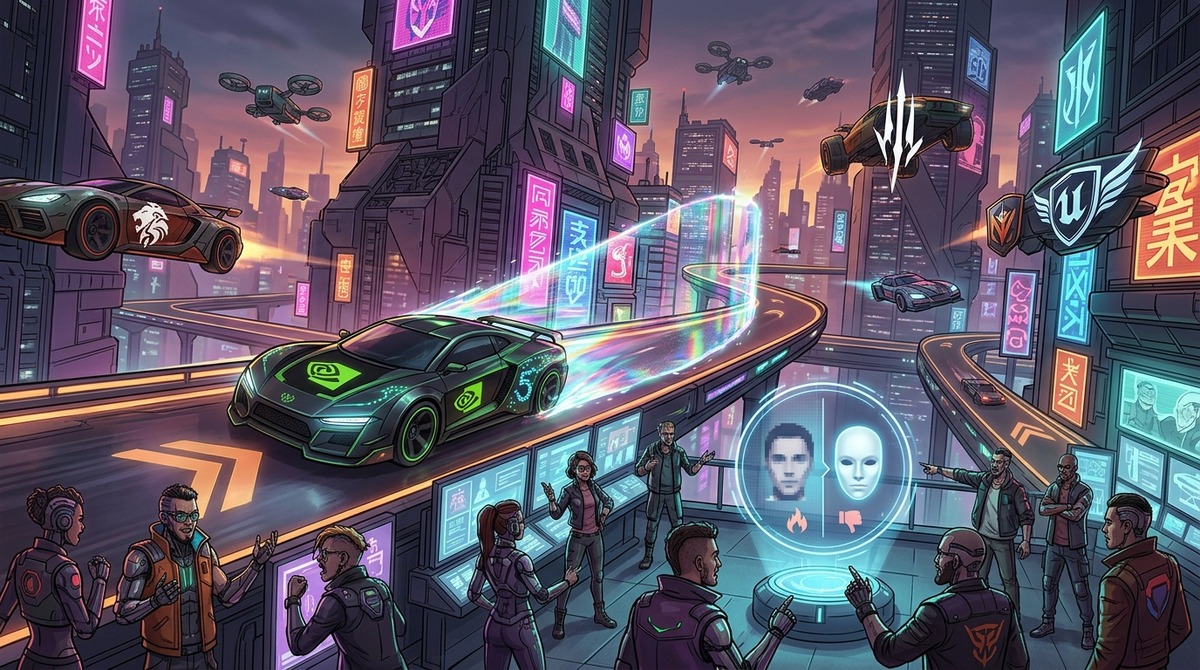
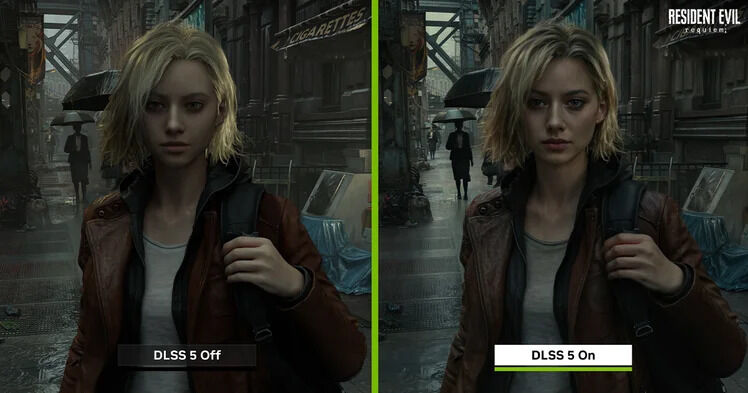
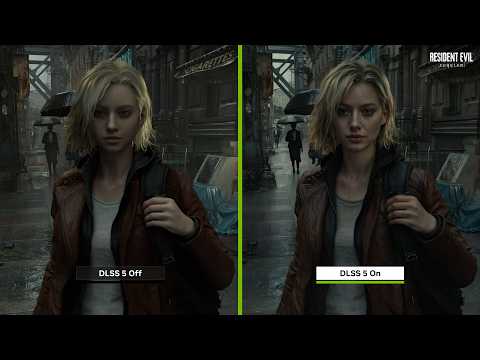
Nvidia promised a quantum leap in graphics, but gamers got punchlines. The new DLSS 5 tech, which Nvidia touts as a 'revolution in visual realism,' landed squarely in the crosshairs of criticism. Early examples, showcasing radically altered character faces in games like Resident Evil Requiem, were instantly christened the 'Yassify Filter.' Gamers have been merciless, posting 'DLSS off vs. DLSS 5 on' comparisons where protagonists morph into unnaturally smooth, attractive versions of themselves, losing their gritty, distinctive edge. Nvidia defends itself, claiming developers retain 'artistic control,' but the community remains unconvinced.
| Title | Nvidia DLSS 5 |
| Genre | Graphics processing technology (upscaling) |
| Developer | Nvidia Corporation |
| Publisher | Nvidia Corporation |
| Release Date | 2024 (early implementations) |
| Platforms | Nvidia GeForce RTX graphics cards (newer generations) |
| Cover | Resident Evil Requiem |
Key Takeaways:
- DLSS 5 employs advanced AI models to 'enhance' details, particularly character faces.
- Early demos reveal unintended, often comical visual effects, quickly dubbed the 'Yassify Filter' by gamers.
- Despite community backlash, publishers like Capcom and Bethesda continue to support the technology, emphasizing its performance advantages.
- The debate raises questions about artistic control and the influence of AI on the original vision of game creators.
A Brave New World or Old Problems?
Nvidia DLSS 5 represents the next step in the evolution of upscaling technology. Unlike its predecessors, DLSS 5 actively 'adds' details to characters, especially faces, aiming for maximum visual fidelity and smoothness. The algorithm, trained on vast datasets, strives to create the most 'realistic' and 'attractive' versions of in-game characters.
However, this generative AI approach sometimes undermines rather than enhances the original artistic vision. In cases like Resident Evil Requiem, distinctive character designs transform into unnaturally smooth, almost perfect versions, losing their unique, often dark, character. This has sparked a wave of memes and criticism from gamers who accuse Nvidia of 'murdering' artistic intent.
For gamers, this presents a dilemma: embrace cutting-edge technology at the cost of altered visuals, or stick with older solutions to preserve a game's original aesthetic.
Vision of the Future or Assault on Artists?
The debate surrounding DLSS 5 goes beyond the tech itself. It's a struggle over who truly controls a game's final look: developers or AI algorithms? Nvidia emphasizes that game creators have full control over implementation, but in practice, many studios lack the resources to customize advanced AI models to their needs. This could lead to homogenized visual effects across different productions.
Many artists and developers express concerns. 'We pour months into crafting unique character designs, and the technology meant to help ends up destroying our work,' says an anonymous graphics artist from a leading game studio. Yet, such voices are few and far between, as most developers can't afford to publicly criticize powerful tech partners like Nvidia.
In online communities, the debate rages on. Forums like Reddit and Discord are flooded with threads on the topic, with users creating mods to 'fix' excessive character beautification. Some suggest that Nvidia should provide developers with more precise control tools, while others call for the feature to be disabled entirely.
DLSS Evolution: From Upscaling to Controversy
The history of DLSS technology dates back to 2018 when Nvidia introduced the first version of its AI-based upscaling system. Since then, the technology has evolved, gaining recognition for its effectiveness in improving performance without significantly reducing image quality. DLSS 2.0, introduced in 2020, brought significant improvements, demonstrating that AI can serve not only to increase resolution but also to remove artifacts and improve the overall look of games.
Nvidia DLSS 3, which appeared with the RTX 40-series cards, introduced even more advanced techniques, such as Frame Generation, which allows AI to generate entire frames of video. This revolutionary functionality allowed for a significant increase in frames per second, which was welcomed by gamers seeking maximum smoothness.
DLSS 4 followed, adding support for DirectML technology and allowing for better integration with game engines. Now, DLSS 5 aims to further refine these techniques, but its introduction has shown that not all innovations are embraced with enthusiasm.
DLSS 5 – How Does It Work?
DLSS 5 is an evolution of previous versions, focusing on even deeper use of artificial intelligence to analyze and improve image quality. This technology not only scales up the image but also actively 'adds' details, especially on character faces, which can be difficult to render in real-time. The algorithm, based on vast training datasets, aims to create the most 'realistic' and 'attractive' versions of characters.
In practice, this means that DLSS 5 analyzes each frame of the game, identifies characters and objects, and then applies advanced AI models to 'complement' the details. The goal is stunning sharpness and smoothness, but as early demos show, this can lead to unintended effects, especially when AI tries to 'improve' character designs that were intentionally imperfect or dark.
In the case of Resident Evil Requiem, distinctive, dark character designs transform into smoothed, almost perfect versions, losing their unique character. This has sparked a wave of memes and criticism from gamers who accuse Nvidia of 'killing' artistic vision.
Is DLSS 5 the Future of Gaming?
Despite the controversies surrounding the 'Yassify Filter,' much indicates that AI technologies in gaming are the future. DLSS 5, despite its flaws, offers significant performance benefits that are invaluable in the era of increasingly demanding games. For gamers with less powerful hardware, DLSS 5 can be a crucial tool for achieving smooth gameplay at high resolution.
Publishers, though unofficially, often side with Nvidia, emphasizing the performance benefits that will allow for better performance in increasingly demanding games. However, the growing wave of community criticism forces them to reflect more deeply on the impact of AI on game aesthetics.
It's worth noting that the controversies surrounding DLSS 5 may be the beginning of a broader debate about the impact of AI on the gaming industry. Are technologies like DLSS 5 the future that will allow for unprecedented levels of detail and performance, or do they threaten the artistic integrity of games?
FAQ
What is DLSS 5?
DLSS 5 is the latest version of Nvidia's upscaling technology that uses artificial intelligence to improve image quality and performance in games.
Why are gamers concerned?
Players point to unintended effects of the 'Yassify Filter,' where AI over-enhances character appearances, often changing their unique aesthetics.
Does DLSS 5 work on all Nvidia graphics cards?
The technology is optimized for newer Nvidia RTX series graphics cards, though its support may vary depending on the model.
What are the benefits of DLSS 5?
DLSS 5 offers significant performance benefits, allowing for smooth gameplay at high resolution, which is particularly important for less powerful computers.