Fenris Creations: Iceland's MMORPG Renaissance. Independence from Pearl Abyss and a Mysterious Alliance with Google DeepMind
Fenris Creations, known for EVE Online, regained independence from Pearl Abyss for $120 million and is now experimenting with Google DeepMind's GenAI for an offline Digital Twin.
Imagine this: Icelandic masters of cosmic simulations regain full control over their magnum opus, then immediately ally with artificial intelligence that could redefine the entire MMO genre. Fenris Creations isn't just returning to its roots after seven years under Pearl Abyss's wing; it's challenging the entire industry with a mysterious project involving Google DeepMind.
| Title | EVE Online |
|---|---|
| Genre | MMO/Space Simulation |
| Developer | Fenris Creations |
| Publisher | Fenris Creations |
| Release Date | 1997 (initial release); 2026 (buyback) |
| Platforms | PC |
| Cover Image | Fenris Creations |
Key Takeaways:
- Fenris Creations regained independence from Pearl Abyss for $120 million
- A secret offline project with Google DeepMind aims to revolutionize EVE Online's economy
- Genie 3 model enables accelerated economic simulations
- No layoffs or plans for an offline player version are expected
A New Chapter in Iceland's Gaming History
This is more than just a rebrand; it's a fundamental shift in trajectory. After seven years under South Korean giant Pearl Abyss, EVE Online is back in its creators' hands. Fenris Creations, as they're now known, bought back their independence for $120 million. Key decisions are once again made in Reykjavik, not in Seoul's sterile offices. This marks the end of an era and the start of the most ambitious chapter in Icelandic game development history.
CEO Hilmar Veigar Pétursson expresses optimism. The team closed last year with $70 million in revenue, and crucially for the community, the buyback process involved no layoffs. Operations in London, Shanghai, and Iceland remain intact. In an industry facing layoffs, this move signals that Icelanders believe in their "eternal" universe.
Fenris Creations returns to a pre-2018 management model. This allows for rapid responses to player feedback. The ownership group now comprises senior management and long-term investors, ensuring consistency.
Industry insiders are buzzing about the integration of Genie 3 technology, which can generate virtual worlds in real time. If Fenris Creations successfully implements these solutions without disrupting game balance, it could represent the biggest technological leap in the MMO genre in two decades. This isn't just about graphics; it's about the game's core logic evolving from a rigid script into a dynamic, living organism.
Testing Boundaries: Offline as a Research Lab
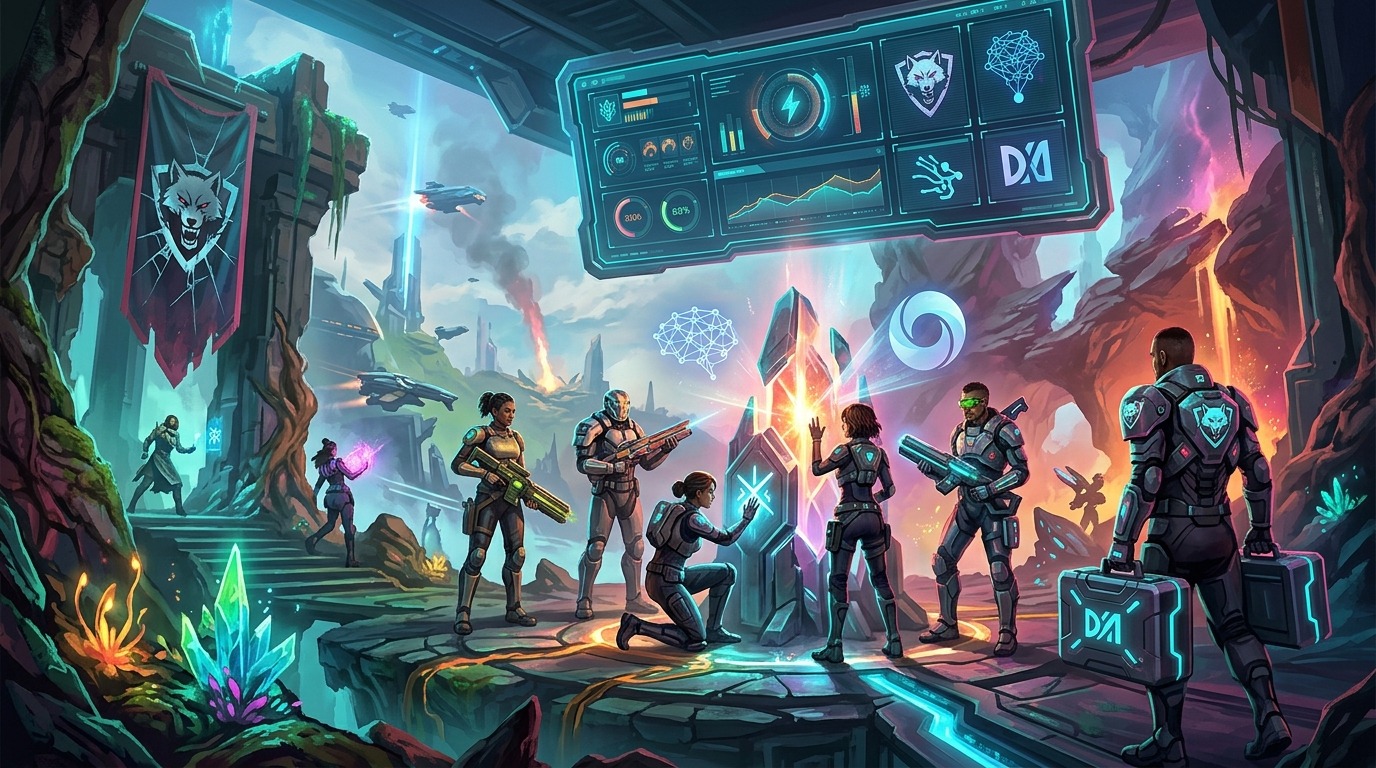
Creating an offline EVE Online server shows Fenris Creations wants to understand the game's DNA at an atomic level. Testing AI models in this "sandbox" allows for simulations that could crash the live economy. Experts note that while "digital twins" are standard in aerospace or automotive industries, in gaming they're revolutionary. Thanks to this isolation, Google DeepMind researchers can "accelerate time" and simulate a decade of economic development in just hours.
Predicting inflation or war outcomes before they occur gives developers a strategic advantage. The offline version isn't for players – it's an advanced interface for GenAI models. Fenris Creations is building a testing ground to train strategic planning algorithms. This move could automate economy management within a year.
Evolution into a Research Laboratory
One must ask: is Fenris Creations transitioning from game studio to tech company? The DeepMind partnership suggests their future business model might involve licensing AI technology developed within New Eden. Given that these learning systems can manage EVE Online's chaos, their potential applications in real-world logistics or finance are massive. This diversification makes the studio highly attractive to tech investors.
By implementing AI, Fenris can drastically reduce operational costs by automating tasks that previously required manual work. This model could become the industry standard for all live-service productions if Fenris proves its effectiveness in the coming year.
The History and Evolution of EVE Online
EVE Online has long captivated players with its depth and complex economy. First released in 1997, it became an MMO icon. Throughout its evolution, it retained its unique character. Now, with new technologies, it has the chance to reach an entirely new level.
More than just a cosmetic change, this marks a fundamental shift in direction. After seven years under a South Korean giant's wing, EVE Online is back in its creators' hands. Fenris Creations, as they're now known, bought back their independence for $120 million. Key decisions are once again made in Reykjavik, not in Seoul's sterile offices. This marks the end of an era and the start of the most ambitious chapter in Icelandic game development history.
CEO Hilmar Veigar Pétursson expresses optimism. The team closed last year with $70 million in revenue, and crucially for the community, the buyback process involved no layoffs. Operations in London, Shanghai, and Iceland remain intact. In an industry facing layoffs, this move signals that Icelanders believe in their "eternal" universe.
Fenris Creations returns to a pre-2018 management model. This allows for rapid responses to player feedback. The ownership group now comprises senior management and long-term investors, ensuring consistency.
The Future of MMOs: Visions and Expectations
The MMO market is evolving, and EVE Online could be a precursor to change. Leveraging AI to manage complex economic systems is a step forward. Players expect ever greater depth and realism, and EVE Online can deliver.
Industry insiders are buzzing about the integration of Genie 3 technology, which can generate virtual worlds in real time. If Fenris Creations successfully implements these solutions without disrupting game balance, it could represent the biggest technological leap in the MMO genre in two decades. This isn't just about graphics; it's about the game's core logic evolving from a rigid script into a dynamic, living organism.
Testing AI models in this "sandbox" allows for simulations that could crash the live economy. Experts note that while "digital twins" are standard in aerospace or automotive industries, in gaming they're revolutionary. Thanks to this isolation, Google DeepMind researchers can "accelerate time" and simulate a decade of economic development in just hours.
Predicting inflation or war outcomes before they occur gives developers a strategic advantage. The offline version isn't for players – it's an advanced interface for GenAI models. Fenris Creations is building a testing ground to train strategic planning algorithms. This move could automate economy management within a year.
FAQ
Will EVE Online switch to an offline model?
No, the offline version is purely a research tool for Google DeepMind. The game remains a fully online MMO.
Are layoffs planned at Fenris Creations?
No, CEO Hilmar Veigar Pétursson has confirmed that the organizational structure remains stable with no planned job cuts.
What is Fenris' AI department focusing on?
They're concentrating on advanced strategic planning, NPC system memory, and the evolution of dynamic systems within the EVE universe.